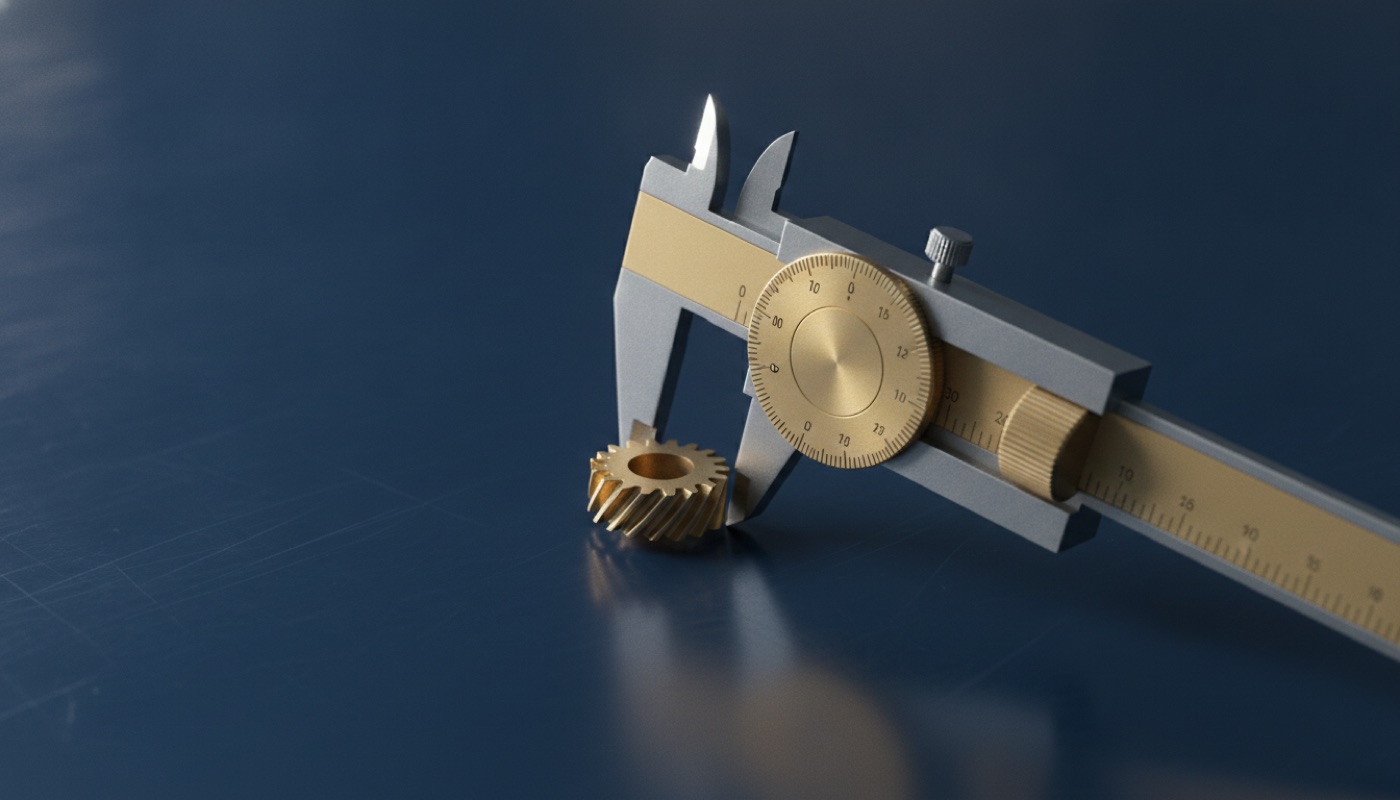
Short answer: A mechanical watch holds a fixed store of energy, releases it in equal beats, and carries only the functions that earn their keep. Manage time the same way. Budget energy instead of hours. Hold a steady cadence, drop commitments that drain torque, and measure a real week before you change it. Then service your habits on a schedule.
A fully wound mainspring holds about forty hours of running time and not one minute more. That figure is printed in the specification and confirmed at the bench. The watch never borrows against tomorrow. It spends what it has, at exactly one second per second, and then it stops.
Your week runs on the same arithmetic with much worse instruments. Watchmaking has spent six centuries on a single problem: finite energy, honest measurement, and functions competing for both. Its vocabulary describes an ordinary calendar with uncomfortable accuracy.
Five terms carry most of the weight here. Power reserve is stored running time. Amplitude is how hard the balance swings. Beat rate is how often it swings. A complication is any function beyond the time. Isochronism is keeping one rate whether the spring is full or nearly spent.
Why a movement is a better model than a to-do list
A to-do list treats work as a queue. Items arrive, wait, and get crossed off. The model says nothing about energy, order or cost, so the list grows without limit and stays cheerful about it.
A movement treats work as a system under load. Power is stored in one barrel, released at a fixed rate, and shared by every function on the dial. Add a job and something else receives less. Our walkthrough of how a mechanical watch movement works follows that chain from barrel to hands.
The myth of finding more time
Finding time asks a mainspring for extra turns. The barrel is a fixed volume of hardened steel, and a full spring cannot take more. On an automatic watch a slipping bridle simply lets the spring skate around the barrel wall.
What you can change is where the energy goes. Watchmakers never add power; they cut friction, remove functions, and improve the release. Those three moves organise the rest of this guide, and much of our writing on time and focus.
You cannot wind yourself past full. You can only cut friction, drop functions, and release what you already hold in a steadier beat.
The bench audit: read your week like a movement
No watchmaker adjusts a watch on a hunch. The movement goes on a timing machine, which listens to the ticks through a microphone and prints what is really happening. The Federation of the Swiss Watch Industry has defended that habit for over a century. Quality is a measured result, never a claimed one.
Three numbers come off the machine, and each answers a different question.
- Rate: seconds gained or lost per day, which says whether the watch runs fast or slow.
- Amplitude: the swing of the balance in degrees, which says how much force is arriving.
- Beat error: the imbalance between tick and tock in milliseconds, which says whether the two halves match.
Only once those numbers exist does anyone touch the regulator. Guesswork is cheaper for a week and dearer for a year.
Step one: record the rate before you change anything
Log one ordinary week in fifteen-minute blocks. Do not improve the week while you record it. A measurement taken during a performance measures the performance.
Two categories are almost always misjudged: meetings and recovery. If your week is mostly conversation, a recording with a transcript is the cheapest timing machine available. Our guide to meeting transcription for teams covers the mechanics.
Step two: test in every position
To earn chronometer certification, a Swiss movement is tested for fifteen days in five positions and at three temperatures. It must hold a rate between minus four and plus six seconds a day. Dial up, dial down and crown down all read differently, because gravity loads the pivots differently.
You have positions too. Working at home, working in an open office, working while travelling and working through back-to-back calls are four separate loads. A routine tuned for one position usually fails in the others. Test all four before declaring a system broken.
Step three: move the regulator a fraction
A regulator arm changes the working length of the hairspring by a fraction of a millimetre. That fraction is worth several seconds a day. The watchmaker makes one change, then runs the movement again for days.
Treat a week the same way. Move one meeting, shift one start time, or drop one standing commitment. A single change can be attributed; a full reorganisation cannot. Engineers call this working inside a tolerance, an idea we unpack in how tolerance and testing control quality.
Tip: Write the date of every change next to its result. A change without a date is an opinion. A change with a date is evidence you can check next month.
Amplitude, beat rate and the honest length of a day
Amplitude is how far the balance wheel swings past its rest position, measured in degrees. A healthy modern movement reaches roughly 270 to 310 degrees dial-up on a full wind. As the mainspring unwinds, amplitude falls and timekeeping degrades long before the watch stops.
This is the number a schedule should respect. A watch does not run perfectly at hour thirty-nine and then fail at hour forty. Quality drops gradually across the whole reserve. Attention behaves the same way, which is why late work looks finished and reads badly.
Watchmakers manage that decline at the source. A mainspring gives uneven torque, strong when tight and weak when spent, so barrels are sized to work in the flat middle of the curve. Keep a margin at both ends of your day for the same reason.
Frequency is the other half of the picture. Movements are rated in vibrations per hour, written vph. A 28,800 vph calibre runs at 4 hertz, or eight beats a second, and the escapement releases one portion of energy per beat. A faster balance recovers sooner from a knock, so high frequency buys stability under disturbance.
Speed is not free. A high-beat movement drains its mainspring faster and wears its pivots sooner. Many long-reserve calibres therefore run deliberately slow. Choose a working cadence on the same terms: fast enough to absorb interruptions, slow enough to last the week.
Which commitments have earned their place?
In horology, every function beyond hours, minutes and seconds is a complication. The word is admirably honest. A date mechanism adds around three dozen parts and a perpetual calendar adds hundreds. All of them draw torque from the barrel that drives the hands.
Good workshops therefore treat new functions with suspicion. The question is never whether a mechanism is possible. It is whether the function repays a permanent cost in friction, thickness and servicing. Our guide to watch complications from date windows to tourbillons ranks them on exactly that basis.
Read your calendar the same way. Each entry below has a mechanical twin, and the twin makes the true cost visible.
| Commitment | Movement equivalent | Cost when idle | Question that settles it |
|---|---|---|---|
| Weekly status meeting | Perpetual calendar | Runs forever without being asked | Would you install it today at full price? |
| Time-boxed project | Chronograph | None while stopped, heavy while running | Is anything actually being measured? |
| Open-ended duty to watch something | Dragging date disc | Constant low drain, never snaps shut | What event ends it? |
| An extra app or inbox | Bolted-on module | Adds height and friction to every task | What did it replace? |
| Standing on-call cover | Second barrel for the alarm | Needs its own energy, always | Who else can carry it? |
Two rules make this audit quick. Anything that runs without being asked deserves the hardest look. Anything you would not install today should come out this quarter.
- Dismantle in order: remove the obligation first, then the tool that served it. Deleting the tool alone leaves the work with nowhere to live.
- Suspect modules: a bolted-on layer adds millimetres to a watch and steps to a task. Every extra app is a module until it replaces something.
- Count corrections, not features: a simple date needs five corrections a year, an annual calendar one, a perpetual none until 2100. Judge a system by how often you must fix it.
- Respect the plain version: collectors pay most for two hands executed perfectly. A short calendar of real commitments is the same achievement.
Troubleshooting a week that keeps losing time
Watchmakers diagnose before opening a case, because faults have signatures. Four common ones map cleanly onto working life.
Fast rate, poor performance: knocking
When amplitude climbs past roughly 320 degrees, the impulse pin can strike the back of the pallet fork. Watchmakers call this knocking, or rebanking. The watch gains time while performing badly, and the parts absorb the punishment.
The human version is a fortnight of overwork that yields fast, shallow output and a ruined third week. The remedy is identical in both cases: reduce the force, and stop chasing the rate.
Racing for no clear reason: magnetism
A magnetised hairspring sticks to itself. The coils cling, the working length shortens, and the watch can gain minutes a day. Nothing is broken, yet one invisible influence has distorted everything at once.
Weeks pick up the same fault. An unresolved conversation or an anxious deadline speeds up every unrelated task and degrades all of them. Demagnetise first, then judge the rate.
Two subtler faults: beat error and isochronism
The remaining pair are quieter and just as costly.
- Beat error: the gap between tick and tock, measured in milliseconds. Under about 0.5 ms is good. Many people run a large one all week, with a strong morning and a hollow afternoon.
- Poor isochronism: a rate that only holds while the spring is fresh. Even torque and a good hairspring protect it. Judge a routine on a tired Thursday, never on a rested Monday.
Tip: Diagnose one fault at a time. If you change the cadence, the tools and the calendar in the same week, no result can be attributed to anything.
Service intervals for habits and tools
Even a perfect watch degrades. A synthetic oil such as Moebius 9010 sits on a jewel bearing in a droplet you can barely see, held there by capillary action. Over years it spreads, thickens and stops doing its job, while gaskets harden and fine debris reaches the pivots. Makers therefore advise a full service every five to seven years: strip-down, cleaning, fresh lubricants, new seals and fresh regulation. The practical routine sits in our complete watch maintenance guide.
Deferred maintenance is quiet and then expensive. A dry pivot does not stop a watch. It wears the jewel a little more each day until a service becomes a repair. Filing systems, templates and standing meetings decay in the same silence.
So book the service: one hour each quarter, spent on commitments, tools and routines. A short quarterly teardown beats the annual overhaul that nobody ever repeats. Hand the genuinely repetitive parts to a machine while you are there. Our notes on everyday tasks an AI assistant can handle list the honest candidates.
Key takeaways
- Energy is the constraint, not hours. Plan around your power reserve, and put demanding work where amplitude is highest.
- Cadence beats speed. A steady beat rate absorbs interruptions; a heroic burst empties the barrel early.
- Every commitment is a complication. It must repay a permanent cost in friction, attention and upkeep.
- Measure, then move one thing. Record a real week, change a single variable, and re-measure before judging.
- Faults have signatures. Knocking, magnetism, beat error and poor isochronism each point to a different fix.
None of this requires owning a watch, though wearing one makes the argument daily. The discipline is old and plain: a fixed reserve, spent in a measured beat, on functions that earn their keep. Check it against a record, and maintain it before it fails. Where that discipline came from is the subject of our short history of measuring time. The wider argument continues through the Craft & Precision journal.