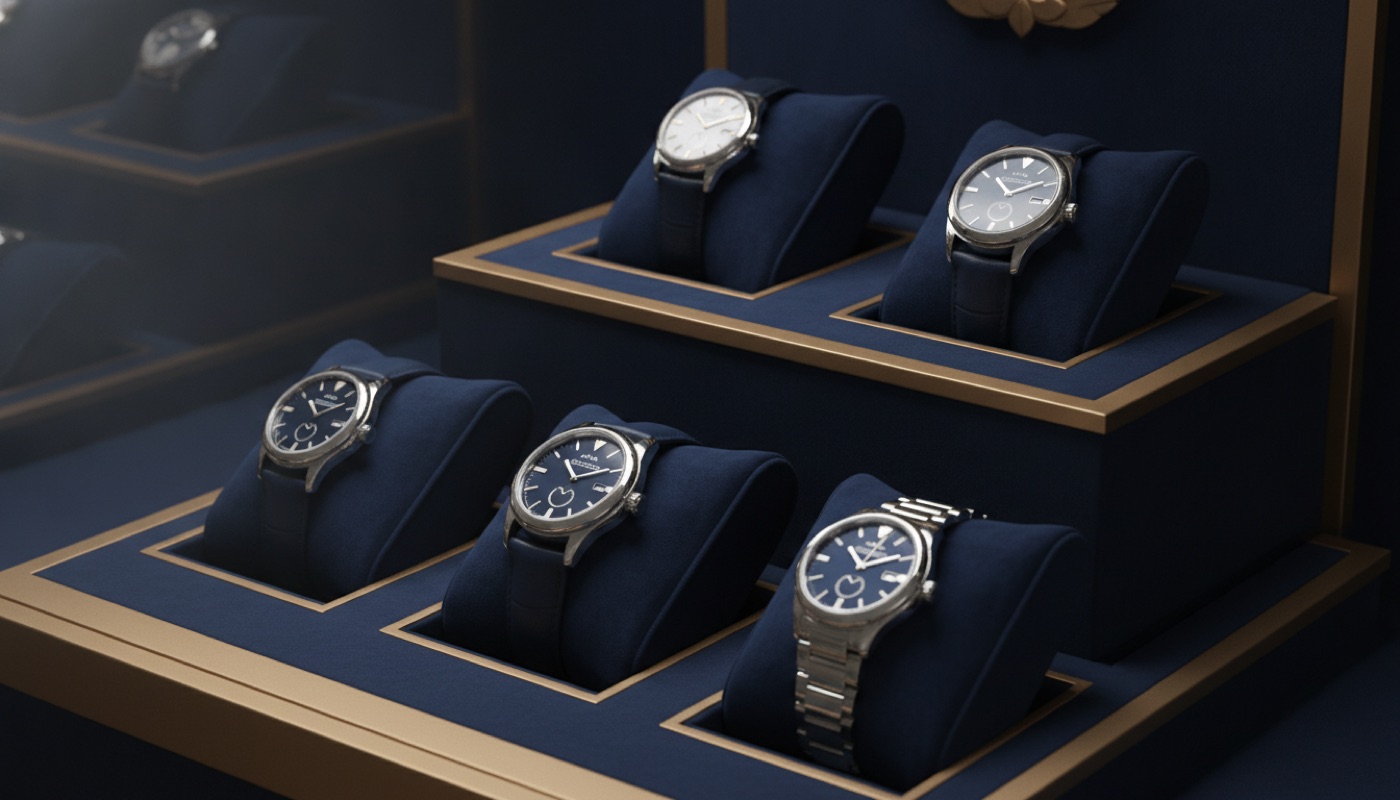
Short answer: Set a ceiling that already includes servicing, straps and insurance. Then choose a movement you understand, a case that fits your wrist, and a seller who stands behind the watch. For most first buyers that means a 36–40 mm steel watch with a sapphire crystal and a proven automatic calibre.
A first luxury watch is a twenty-year decision, and most people make it in an afternoon. Waiting lists, hype models and investment chatter push new buyers towards the same short list. Those pieces are often the least suited to being someone's only good watch. Choosing well is not difficult, but it does run in a particular order.
That order is budget, movement, fit, seller, then the long run. Money comes first, because it removes half the market and most of the anxiety. Mechanics come next, because they decide how the watch behaves every morning. Fit follows, since a watch that wears badly never leaves the drawer.
Set a budget you can live with
Decide what you can spend without wincing, then treat that number as a ceiling rather than a target. A luxury watch is a discretionary object. The moment it strains your finances, it stops being a pleasure. Two rules keep first buyers out of trouble. Do not finance a watch, and do not stretch for a famous name at its most compromised entry point.
Entry-level models from prestigious houses are frequently their thinnest work. The flagship of a smaller maker often gives you more watch for the same money. Judge the object in front of you, not the logo on the dial.
What does more money actually buy?
Past a modest price, extra spend does not buy accuracy. A cheap quartz watch keeps better time than almost any mechanical one. What you pay for instead is craft, material and construction.
- Movement finishing: hand-bevelled bridges, polished screw heads and Côtes de Genève striping, most of it visible only under a loupe.
- Case and bracelet work: crisp facets, solid end links, screwed links and a machined clasp instead of stamped folded metal.
- Materials: steel is the baseline, while titanium, ceramic and gold all cost more to machine and finish.
- Movement architecture: in-house calibres, longer power reserves and chronometer certification.
- Scarcity and history: brand heritage, plus production the maker deliberately keeps small.
All five are legitimate pleasures. None of them is a necessity. A buyer who knows which one they are paying for negotiates the whole market from a stronger position.
The costs that arrive after the purchase
Ownership carries a running cost, and it is easier to plan for than to discover. Build these four into your ceiling before you shop.
- Servicing: a full strip, clean, lubrication and regulation every five to ten years, priced by complexity.
- Straps: a leather strap worn daily lasts a year or two, while rubber and textile cost less and survive sweat better.
- Insurance: list the watch by name on a home contents policy, or take a separate valuables policy.
- Pressure testing: gaskets harden as they age, so seals want checking every couple of years.
Tip: Hold back roughly a tenth of your budget for a second strap and the first service. A watch you can wear anywhere is worth more to you than the next model up the range.
Quartz, automatic or hand-wound?
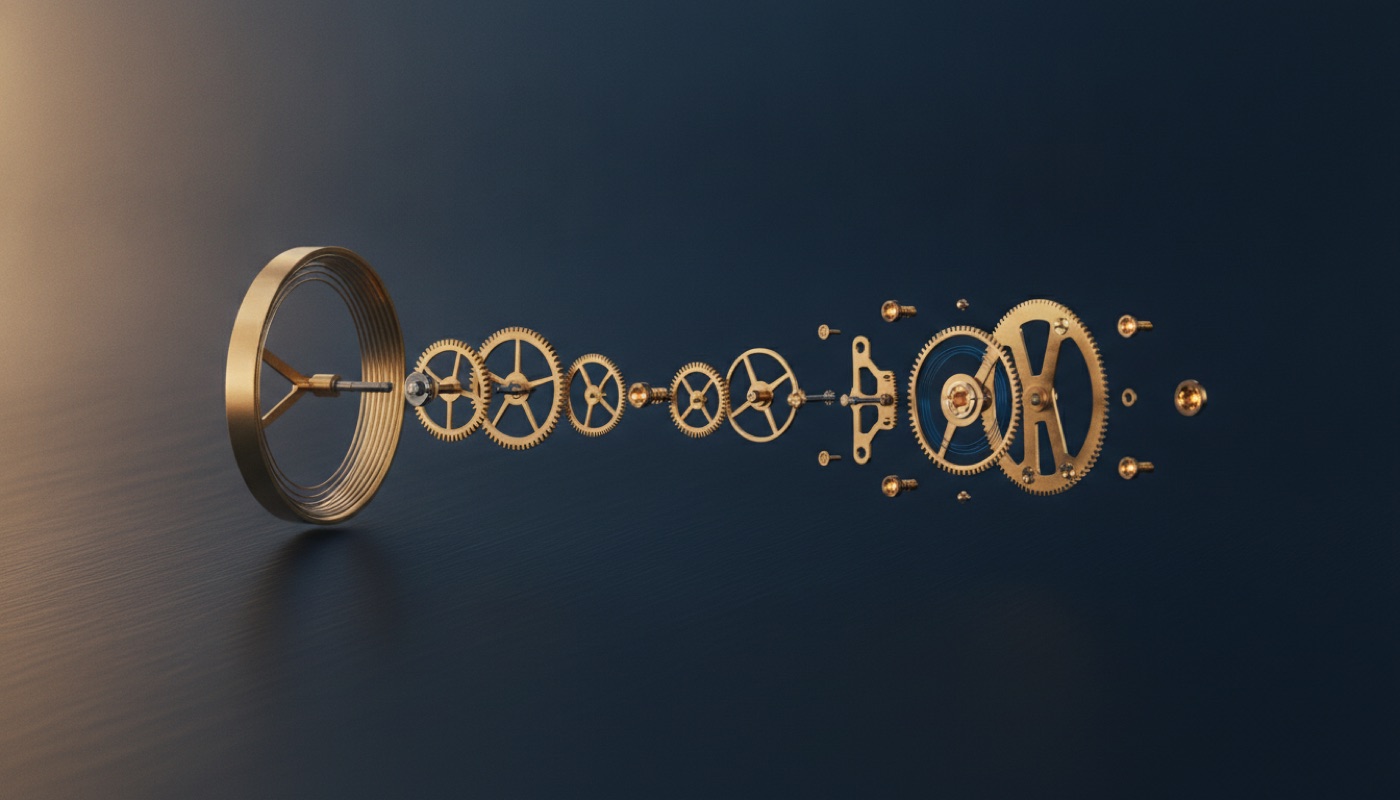
The movement decides how the watch behaves every day, so choose it deliberately. Quartz runs on a battery and a crystal oscillator ticking away at 32,768 hertz. A mechanical watch stores its energy in a wound spring, which the escapement pays out one step at a time. Our explainer on how a mechanical movement keeps time follows that chain part by part.
| Movement | Power source | Typical accuracy | What it asks of you | Suits |
|---|---|---|---|---|
| Quartz | Battery and quartz oscillator | ±15 seconds a month | A battery every two to three years | Tool watches and travel |
| Automatic | Mainspring wound by a rotor | About ±10 seconds a day | Regular wear, or a winder | Most first luxury watches |
| Hand-wound | Mainspring wound at the crown | About ±10 seconds a day | Thirty seconds of winding daily | Slim dress watches |
Quartz is the rational choice when the watch is a tool first. Most first-time buyers still pick mechanical, and the reason is honest enough. A machine that runs on nothing but a wound spring is much of what luxury watchmaking sells.
Do you really need an in-house movement?
No, and that assumption costs people money. Supplied calibres such as the ETA 2824-2, the Sellita SW200-1 and the Miyota 9015 have been produced in enormous numbers. Spare parts are easy to find, and almost any competent watchmaker can service them. An exotic in-house calibre often has to travel back to the manufacturer, which means longer waits and larger bills.
What accuracy should you expect from a mechanical watch?
A good mechanical watch that gains or loses a few seconds a day is behaving as designed. Chasing quartz-like precision from a balance wheel leads only to disappointment.
If measured precision matters to you, look for chronometer certification from COSC. Certified movements are held to a mean daily rate of −4 to +6 seconds, and they are tested before ever being cased. Read it as evidence of quality control, not as a promise about your own wrist. The same logic of stated limits and measured results governs manufacturing generally, as our study of how tolerance and testing control quality explains.
Rate can also be adjusted at service. A small, consistent daily deviation is a note for the watchmaker, not a fault.
Keep complications light on a first watch. A date window is plenty. Every extra function adds thickness, cost and servicing complexity, as our guide to complications from date windows to tourbillons makes clear.
Buy the watch you cannot stop thinking about, not the one you cannot stop hearing about.
How the watch should fit your wrist
Specification sheets mislead more buyers than salespeople do. Diameter is the number everyone quotes, and it is the least useful of the three that matter. Measure your wrist with a tape before you shop, and write the figure down in millimetres.
The three measurements that matter
- Lug-to-lug length: the distance from one lug tip to the other. It decides whether the case overhangs the flat of your wrist.
- Case thickness: anything much over 12 mm begins to fight a shirt cuff. A slim case wears smaller than its diameter suggests.
- Diameter: useful mainly for judging dial presence. Between 36 mm and 40 mm suits most wrists.
Then try the watch on properly. Wear it for the whole conversation, walk to the daylight by the window, and see how it sits when your arm hangs down.
Tip: Photograph the watch from above at arm's length before you buy. That is the angle you will actually see for the next twenty years, and it flatters far less than a close wrist shot.
Which materials are worth paying for?
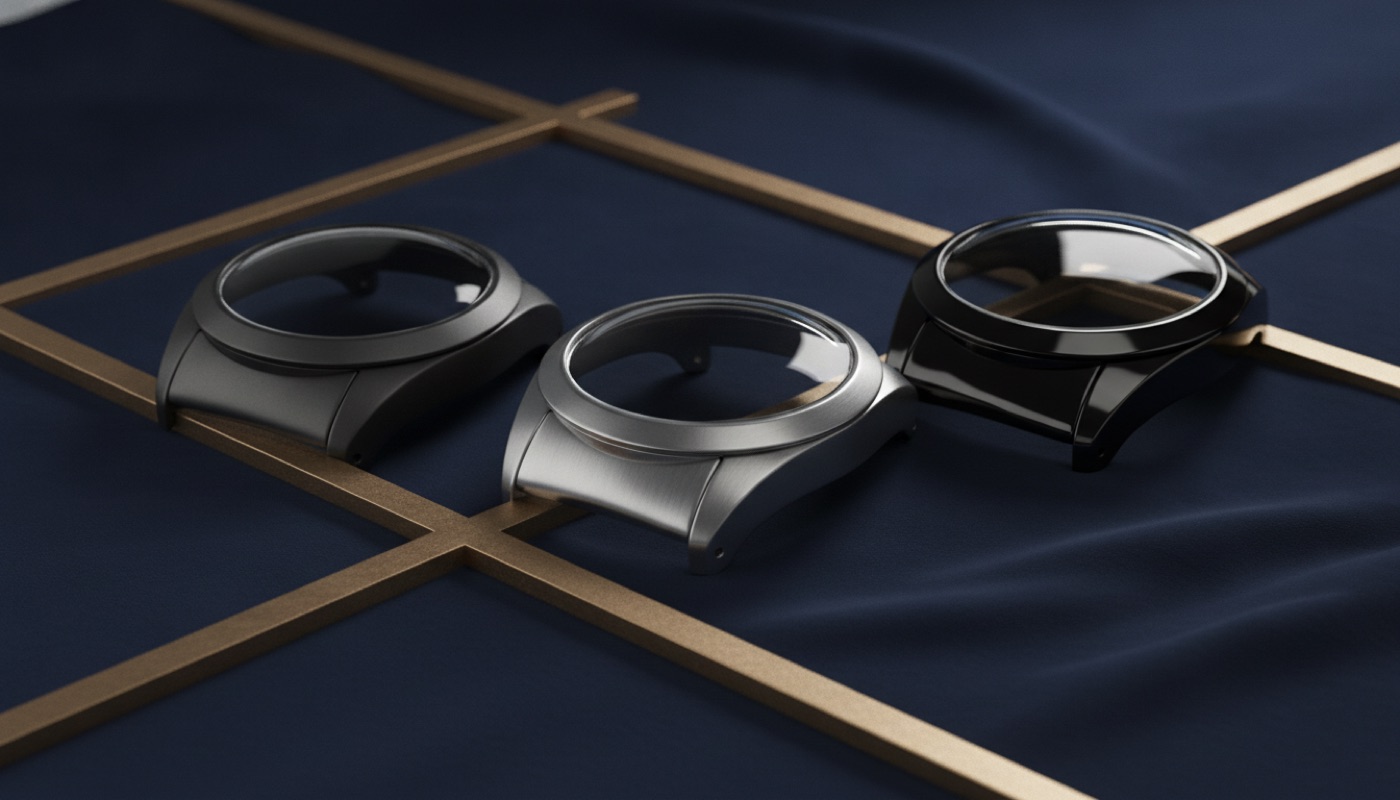
Insist on a sapphire crystal at luxury prices. Sapphire is Mohs 9, so ordinary grit and door frames will not mark it. Beyond the crystal, the choice is mostly about weight and character.
- Stainless steel: the versatile default, usually in grade 316L. It brushes, polishes and takes knocks well.
- Titanium: roughly 43 per cent lighter than steel and kind to sensitive skin, though softer grades scratch more easily.
- Ceramic: highly scratch resistant and colour stable, yet brittle enough to chip on a hard impact.
- Gold: heavy, soft and precious, which makes it a second watch far more often than a first.
Our comparison of sapphire, steel, titanium and ceramic sets out the trade-offs in more detail.
New, pre-owned or vintage?
Where you buy shapes both the price and the risk. Four routes are worth knowing, and each rewards a different temperament. Our topic page on buying a watch follows each of them further.
| Route | Typical price | What you gain | Main risk |
|---|---|---|---|
| Authorised dealer | Full retail | Factory warranty, clean provenance, a service relationship | Paying the most, plus waiting lists on hyped references |
| Grey market | Below retail | Unworn stock with no waiting list | Warranty handled by the seller, not the maker |
| Pre-owned specialist | Well below retail | Discontinued references and real savings | Unclear service history, replaced parts |
| Vintage dealer | Anything at all | Character and dials nobody makes now | Scarce spares, and assume no water resistance |
Buy the seller as much as the watch. Ask for a written guarantee of authenticity, service history where it exists, and box and papers where possible. Labelling deserves attention too. The term Swiss made is defined and policed by the Federation of the Swiss Watch Industry. Our piece on what that label certifies, and what it does not unpacks the detail. A seller who is vague about provenance is telling you something useful.
Five beliefs that cost first-time buyers money
Most expensive mistakes begin as received wisdom. These five come up in almost every first purchase.
- A watch is an investment. A handful of references trade above retail. The overwhelming majority depreciate, including superb ones. Buy for the daily return instead.
- Bigger reads as more serious. The 44 mm fashion of the 2000s was exactly that, a fashion. Diameters have drifted back down ever since, and legibility never depended on size.
- Water resistant covers swimming. A bare 30 m marking is a rain-and-handwashing rating. Read what each depth marking permits before the first holiday.
- A watch winder is essential. Not for a first watch. Resetting a three-hand automatic takes ten seconds, and that money buys a better strap.
- I will just flip it if I go off it. Selling takes commission, time and paperwork. Assume you are keeping it.
The ten-minute inspection before you pay
Every route deserves the same short examination. None of it requires expertise, only patience.
- Wind and set it. The crown should turn smoothly with no grinding, and the hands should move without hesitation.
- Read the case edges. Heavy polishing rounds off lug facets and softens the original lines. Compare it with catalogue photographs.
- Match dial and hands. Luminous plots on the dial and hands should have aged to a similar tone.
- Flex the bracelet. Stretch, rattle and loose pins are wear, and replacement links are expensive.
- Check the paperwork. Reference and serial numbers should agree across the card, the invoice and the case back.
- Watch the rate. Set it against a phone clock, then check the drift the next morning if the seller allows.
Owning it for twenty years
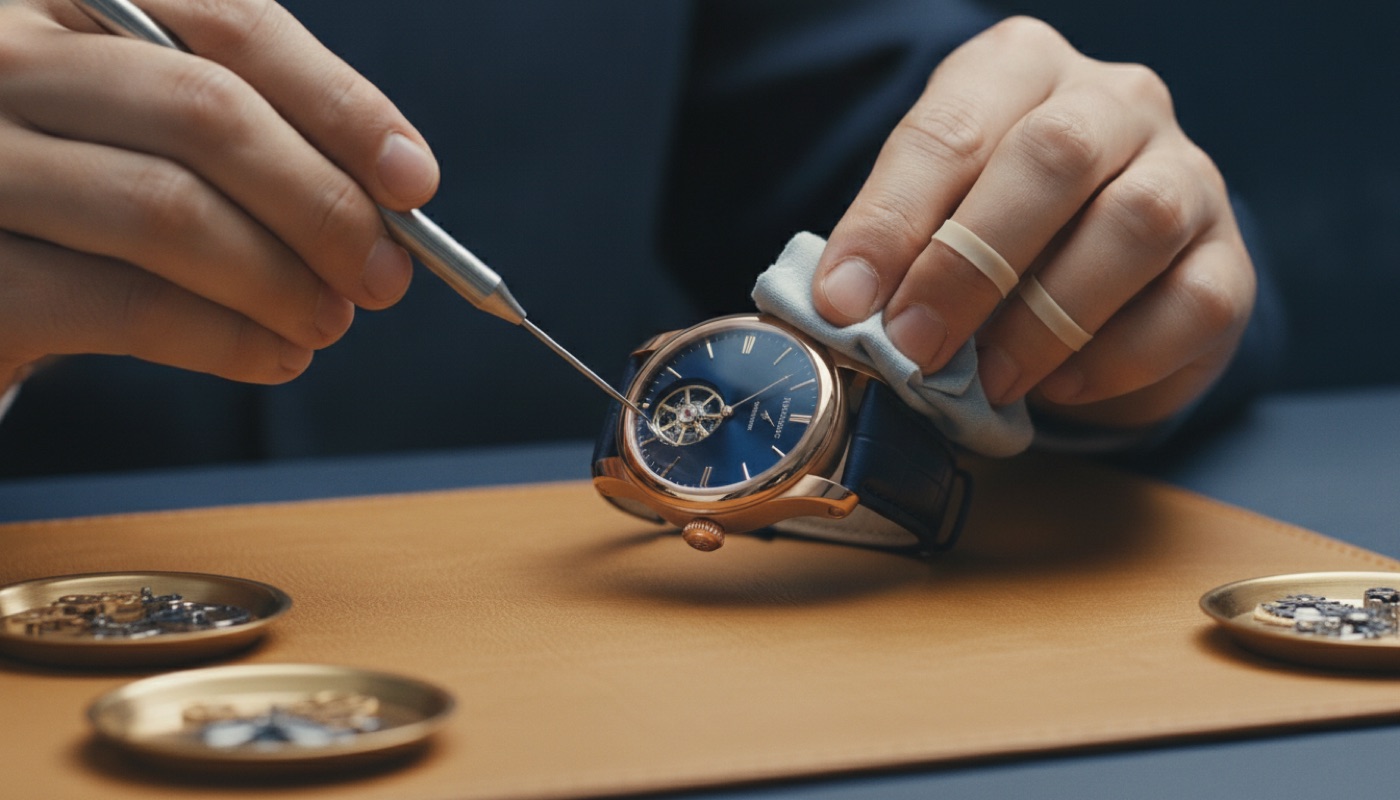
The purchase is the short part. Rinse the case after salt water, wipe it with a soft cloth, and have the seals tested before you rely on them. Full servicing keeps the lubricants doing their job, and our guide to keeping a fine watch running covers the routine in detail.
What to keep, and where to keep it
Keep every scrap of paper. Warranty cards, service invoices and the original box all affect what the watch is worth later, and they cost nothing to store. Photograph the watch and its serial number, then keep that image somewhere the watch is not.
Store it away from magnets, damp and radiators. A magnetised balance spring runs fast until a watchmaker clears it, and the usual sources are objects you already keep on a desk.
Finally, remember that a first watch is a starting point, not a verdict. Modest, legible three-hand designs age well. That is why Copenhagen-based Targa Watches builds collections such as Just Date and DW1 around a clean dial and a simple case.
Key takeaways
- Set a ceiling that already includes servicing, straps, insurance and pressure testing.
- A proven supplied calibre is a practical strength in a first watch, not a compromise.
- Lug-to-lug length and case thickness predict comfort better than diameter does.
- Buy the seller as carefully as the watch, especially pre-owned and vintage.
- Expect depreciation, and buy a watch you intend to wear rather than trade.
Give your shortlist a month before you commit. The right watch survives that month easily, while a hype purchase rarely does. When you are ready to go deeper into movements, materials and care, the Watches & Horology hub continues from here.