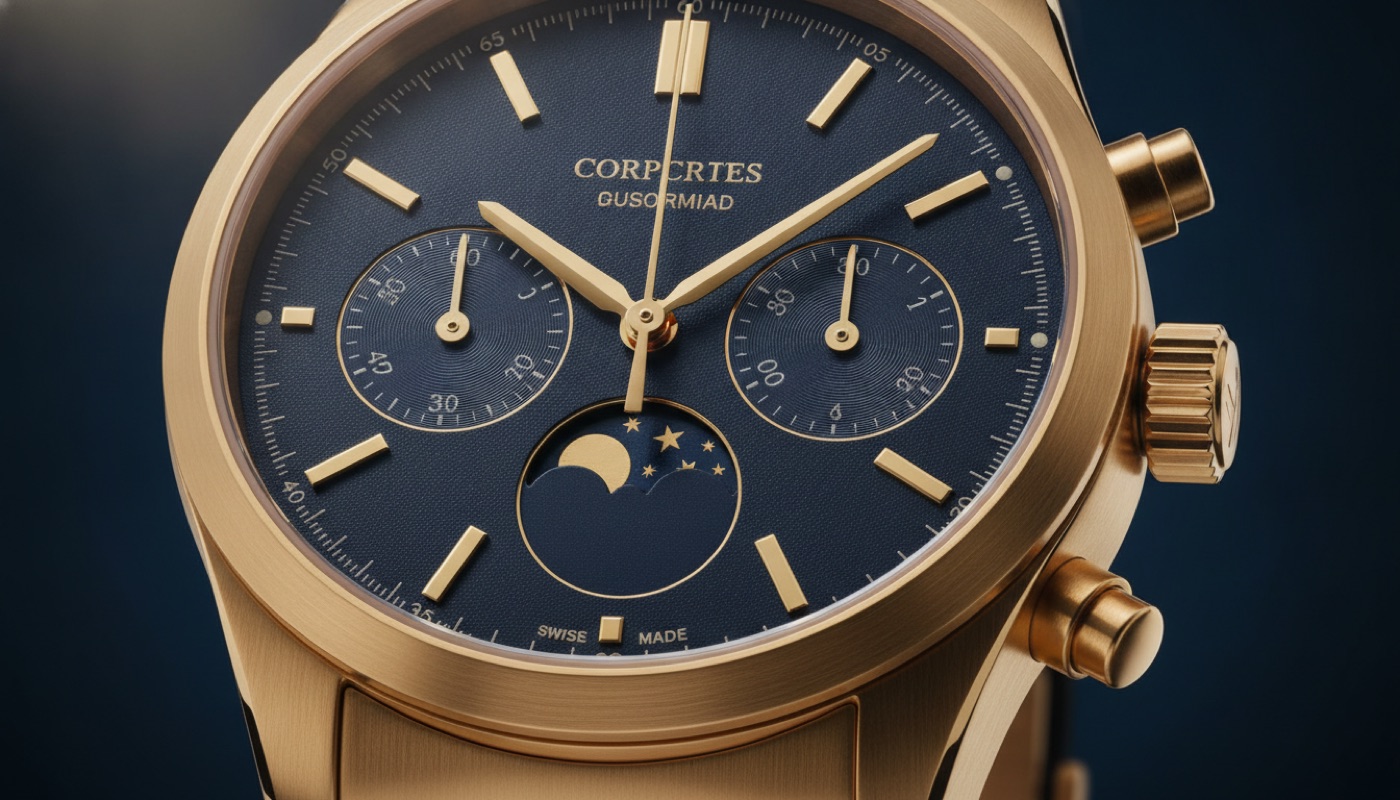
Short answer: A complication is any function a watch performs beyond showing hours, minutes and seconds. Date windows, second time zones, chronographs, calendars, moonphases and chiming repeaters all count. Simple complications add a few dozen parts. A perpetual calendar or minute repeater can add hundreds, and price climbs with the part count.
Horology may be the only field where "complication" is a compliment. Nearly every one was invented to make life simpler, not harder. A date window spared a merchant a diary. A second time-zone hand spared a traveller a second watch. A pulsometer scale spared a doctor a calculation. The complexity sits inside the case so that the person wearing it can stop thinking.
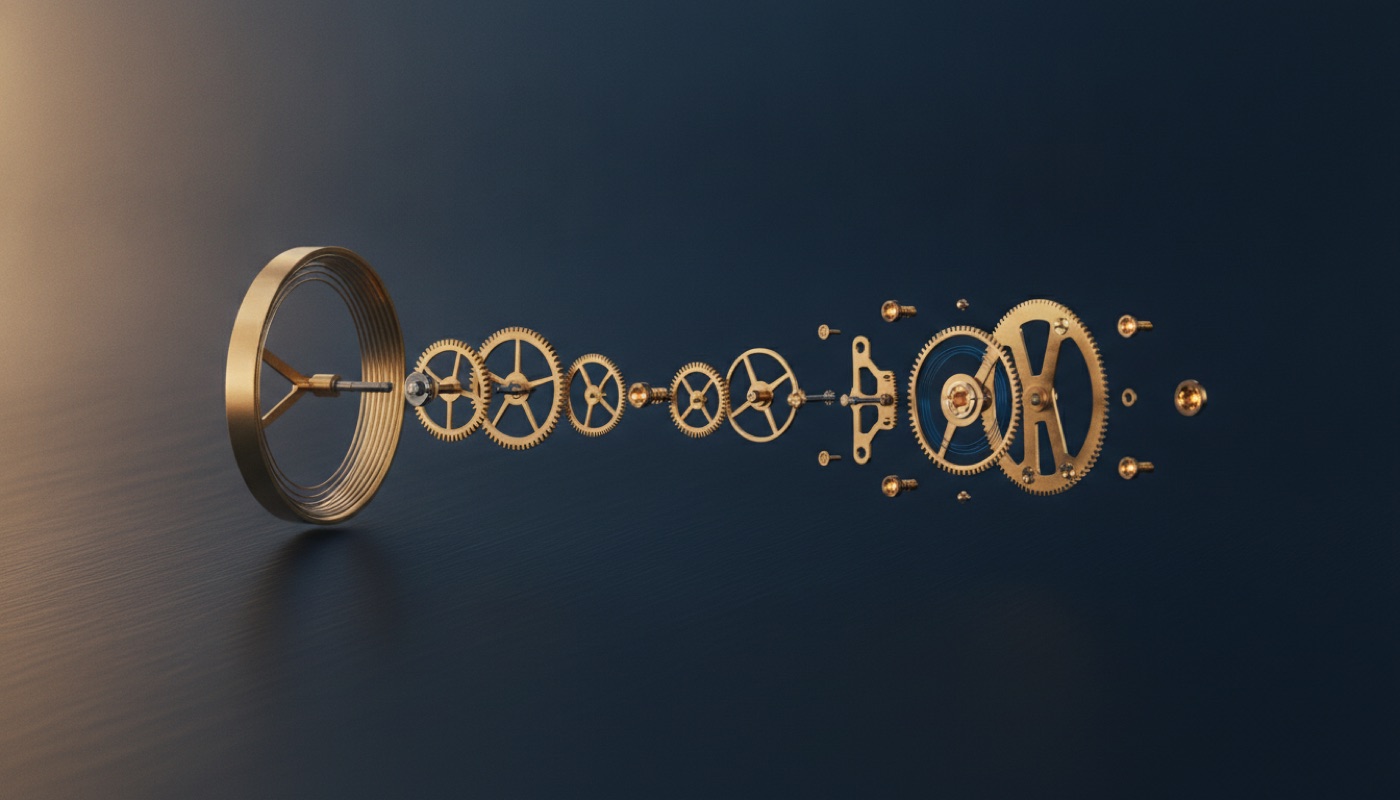
The range is enormous. A date mechanism adds perhaps three dozen parts to a movement. A minute repeater can triple the component count and occupy one specialist for months of assembly and tuning by ear. Knowing what each function does is useful. Knowing what it costs you in thickness, servicing and money is the most useful thing a buyer can carry into a boutique.
What counts as a complication?
The base movement handles hours, minutes and usually running seconds. Everything past that is a complication. If you want the mechanism underneath, our walkthrough of how a mainspring becomes a measured second sets out the five stages every calibre follows. Everything either side of it is indexed under watch movements. A sweeping seconds hand does not qualify. A date window does, if only just.
At the top sits the informal title of grand complication. By tradition it means a watch that draws on three families at once. Those families are timing, such as a chronograph; astronomical, such as a perpetual calendar; and striking, such as a minute repeater. No body certifies the term. The Fondation de la Haute Horlogerie keeps a reference encyclopaedia of this vocabulary that rewards slow browsing.
Integrated or modular: why identical functions cost different money
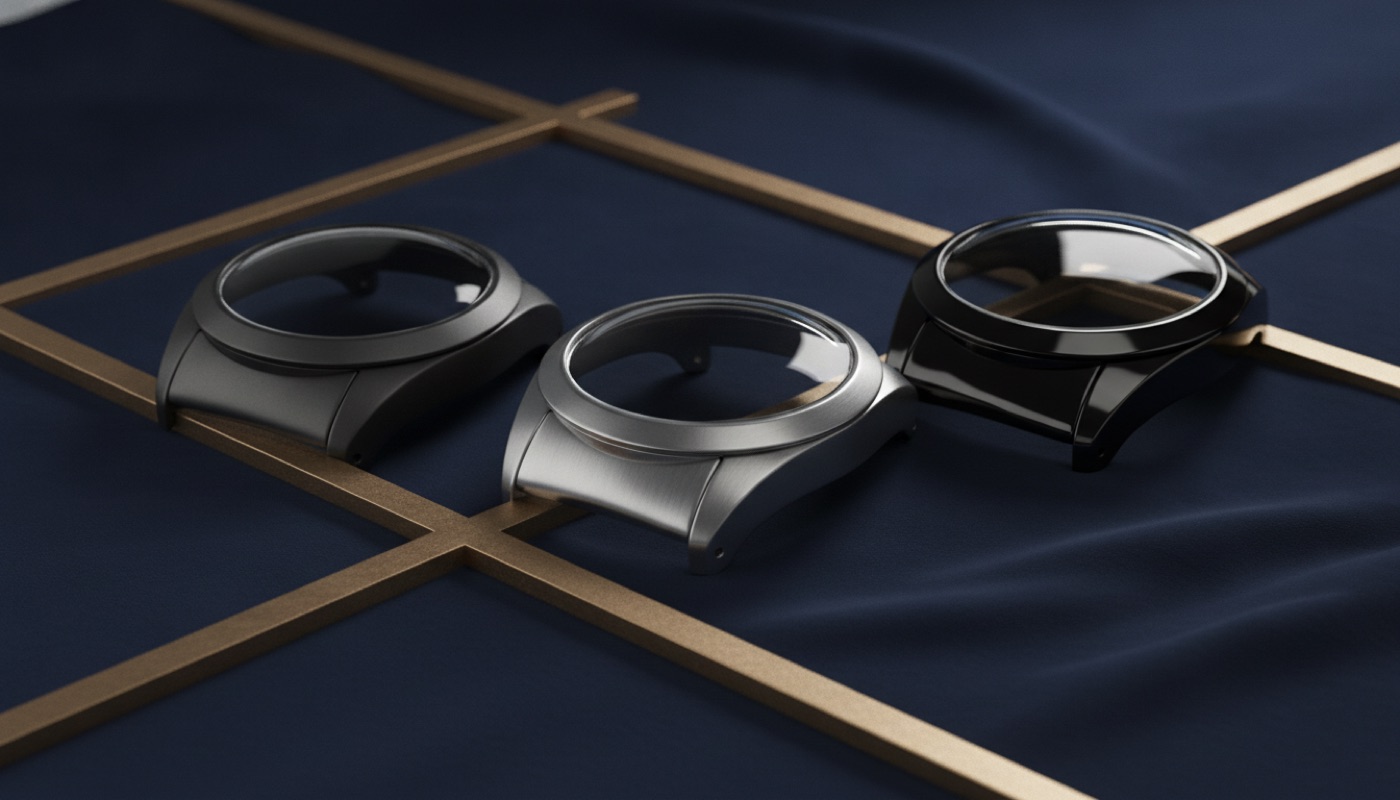
A complication can be designed into the calibre from the start, or bolted on as a separate layer. Integrated designs are usually slimmer and more elegant to service, because the extra parts share plates and bridges with the base movement. Modular designs stack a self-contained plate on top of a proven calibre.
Modules keep development cheap and repairs straightforward, but they add height and often push the pushers or crown out of line with the case. This is the main reason two watches with the same listed functions can differ by three millimetres in thickness and thousands in price.
| Complication | What it shows | What you have to do | Complexity |
|---|---|---|---|
| Date window | Day of the month | Correct it five times a year | Low |
| GMT hand | A second time zone | Reset when you land | Low to medium |
| Chronograph | Elapsed time | Start, stop, reset | Medium to high |
| Annual calendar | Date, day and month | One correction each March | High |
| Perpetual calendar | Date, day, month, leap year | Nothing until 2100 | Very high |
| Minute repeater | The time, chimed aloud | Push the slide and listen | Extreme |
The complications you will actually use
Four functions do most of the practical work in modern watchmaking. None needs exotic engineering, and all four can be owned without extravagance. These are the complications a watch wears to work.
Date, day-date and big date
A standard date is a toothed ring with 31 positions. A finger on an hour-driven wheel nudges it forward once a night. Cheaper versions creep over 20 minutes or so, while better ones snap over instantly at midnight. A day-date adds a second ring for the weekday. A big date uses two discs, one for tens and one for units, read through a wider aperture.
The month problem is deferred rather than solved. Because the ring assumes 31 days everywhere, you correct it after February, April, June, September and November. That is five corrections a year, and it is exactly the gap the calendar complications below were built to close.
GMT hands and world timers
A GMT watch adds a hand that circles the dial once every 24 hours, read against a fixed or rotating scale. It keeps home time permanently visible while local time moves. The two designs differ in which hand you move. A traveller GMT lets you jump the local hour hand forward without stopping the watch, while a caller GMT moves the 24-hour hand instead.
A world timer goes further. A rotating ring of 24 city names sits around a 24-hour disc, so every zone is legible at a glance. Louis Cottier developed the mechanism that made this practical in the 1930s. It remains one of the most useful ideas in dial design, and one of the hardest to keep readable.
- Power-reserve indicator. A small gauge showing how much running time is left in the mainspring. It matters most on hand-wound watches and on movements with reserves measured in days.
- Moonphase. A disc carrying two moons turns behind a shaped aperture, classically driven by a 59-tooth wheel, or two lunar months of 29.5 days.
- Alarm. A second barrel drives a hammer against a gong or the case back. Rare today, but the most genuinely useful chiming function ever made.
The moonphase carries a small, charming error. The real synodic month lasts 29.53 days, so the 59-tooth design drifts a full day roughly every two years and eight months. High-precision versions use a 135-tooth wheel and stay correct for about 122 years.
The chronograph, pusher by pusher
A chronograph is a stopwatch built into a running watch, and mechanically it is the most demanding of the mainstream complications. Pushers at the case edge start, stop and reset a dedicated centre seconds hand. Sub-dials count the elapsed minutes and hours. Under the dial, a clutch couples the stopwatch works to the moving train only when you ask it to.
Reset is the elegant part. Heart-shaped cams sit on each counter shaft, and a hammer drops onto them. Whatever position the cam is in, the hammer's flat face rolls it back to zero in a single movement. Two refinements are worth knowing. A flyback resets and restarts on one press mid-run, born of aviation navigation. A rattrapante, or split-seconds, carries two stacked hands so you can time two runners at once.
Column wheel or cam: what you feel in the pusher
Two systems marshal the sequence. A column wheel is a small castellated wheel that rotates a step at a time, its columns raising and dropping levers in turn. A cam-and-lever system, sometimes called a shuttle cam, does the same job with stamped parts. The column wheel costs more to make and adjust, and you feel the difference as a crisper, lighter push.
The clutch matters too. A lateral clutch swings a wheel sideways into mesh, which can cause a tiny stutter of the seconds hand at start. A vertical clutch engages by friction from above, so the hand starts dead still and the amplitude drops less. Neither is fragile, but the vertical clutch suits watches whose chronograph runs all day.
Reading a tachymeter, pulsometer or telemeter
The scales printed around chronograph dials are conversion tables, not decoration. Each turns elapsed seconds into something more useful.
- Tachymeter. Time one kilometre or one mile, then read speed off the scale. The maths is simply 3,600 divided by the elapsed seconds.
- Pulsometer. Graduated for a set number of heartbeats, usually 30. Start on the first beat, stop on the thirtieth, and read beats per minute.
- Telemeter. Start at the flash, stop at the bang. Sound covers roughly one kilometre every three seconds, and the scale does that division for you.
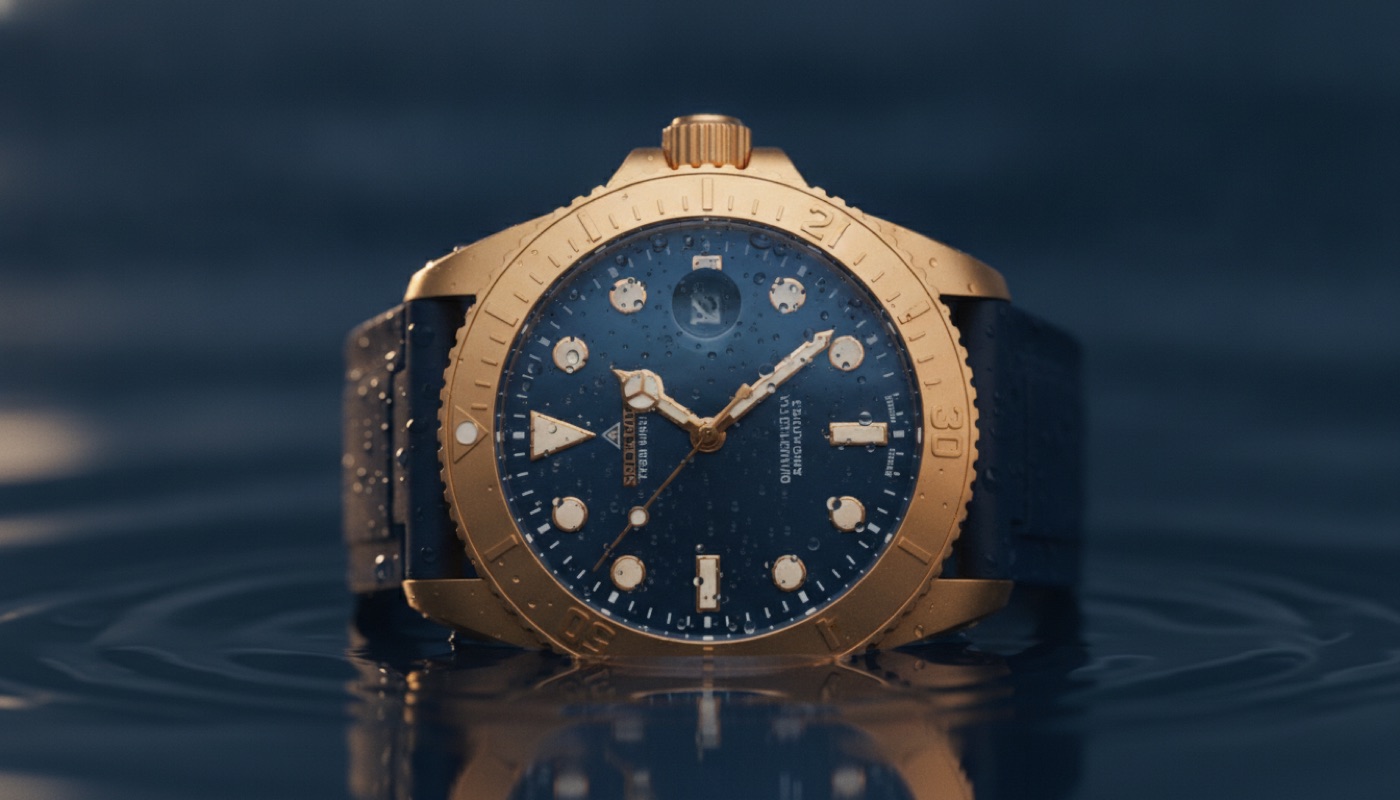
Tip: Do not press chronograph pushers underwater unless the watch is specifically rated for it. Only screw-down pushers are sealed while operated, a point our guide to which ratings survive a pressed pusher spells out.
Calendars: from five corrections a year to none
Calendar complications answer one awkward fact. The Gregorian calendar is irregular, and a watch is a machine of regularity. The family is best understood by how much of that irregularity each member has been taught.
- Simple date. Knows nothing. It assumes 31 days every month, so you correct it five times a year.
- Annual calendar. Knows which months have 30 days and which have 31. It is defeated only by February, so you correct it once, on 1 March.
- Perpetual calendar. Knows month lengths and the four-year leap cycle of 1,461 days, usually encoded in a slotted 48-month cam that a lever reads. It needs no correction until 2100.
That 2100 date is not a defect but arithmetic. Under the Gregorian rule a century year is a leap year only when it divides by 400. So 2000 kept its extra day, and 2100 will not. Wikipedia's article on the perpetual calendar sets out the rule in full. A handful of secular perpetuals encode even that exception in steel.
The danger zone: when not to change the date
Calendar wheels engage for hours around midnight, long before the date visibly jumps. A creeping date holds its driving finger against the ring for twenty minutes or more. An instantaneous jump keeps a spring under tension until it fires. Forcing a quickset while those parts are loaded can chip a tooth, and that repair costs far more than the complication looks.
The safe window is the working day. Advance the hands until the date jumps, which identifies midnight on the dial, then wind them back into the afternoon before touching the quickset. Watches with a true instantaneous jump are more tolerant, though the habit costs nothing either way.
High complications: chimes, cages and solar time
Above the calendars sits work only a few dozen workshops attempt. The minute repeater chimes the time on demand. Hours sound on a low gong, quarter-hours on both gongs together, and the remaining minutes on a high gong. Hammers strike coiled wire gongs wrapped around the movement, and a small governor smooths the tempo so the sequence does not race.
It remains watchmaking's severest test of hand skill, because no drawing can specify how a case should ring. The grande sonnerie is harder still, striking hours and quarters in passing without being asked, from its own dedicated barrel.
Does a tourbillon make a watch more accurate?
The tourbillon, French for whirlwind, mounts the entire balance and escapement inside a cage that usually turns once a minute. Rate errors that a watch collects in fixed vertical positions are therefore averaged out. Abraham-Louis Breguet patented the idea in 1801 for pocket watches that spent their lives upright in a waistcoat. Its history is now longer than the problem it solved.
A wristwatch already tumbles through every orientation as your arm moves, so it performs much of that averaging by itself. Independent testing bears this out: no tourbillon is required to pass chronometer certification, and plenty of flat, cheap movements do. The cage is a demonstration of poise and craft, not a shortcut to precision.
A tourbillon does not make a wristwatch more accurate. It makes a watchmaker's skill visible, which is a different kind of value, honestly priced.
Rarer still is the equation of time, which shows the gap between true solar time and the mean time our clocks agree to keep. That gap swings by as much as 16 minutes across the year, because Earth's orbit is elliptical and its axis is tilted. It is the same discrepancy that shaped sundials and marine chronometers, which our history of how the world settled on mean time follows. A few ateliers go further and rotate a chart of the night sky above the owner's latitude.
Choosing complications for your life, not the catalogue
The right complication is biographical, so the honest test is to describe yesterday. If it involved a colleague eight hours away, a GMT hand has already earned its place. If it involved timing anything at all, so has a chronograph. If it involved neither, the truthful answer may be that you want beauty, which is a perfectly legitimate specification.
Legibility is the constraint people forget. Every added hand, disc and sub-dial takes space from the ones you read most. A crowded dial then slows you down at the exact moment you glance. The case for restraint is the same one made in our piece on minimalism from watch dials to interfaces. Targa's own range shows where most buyers land. Just Date and DW Chronograph sit at either end of that useful middle in the Targa collections.
The running costs of complexity
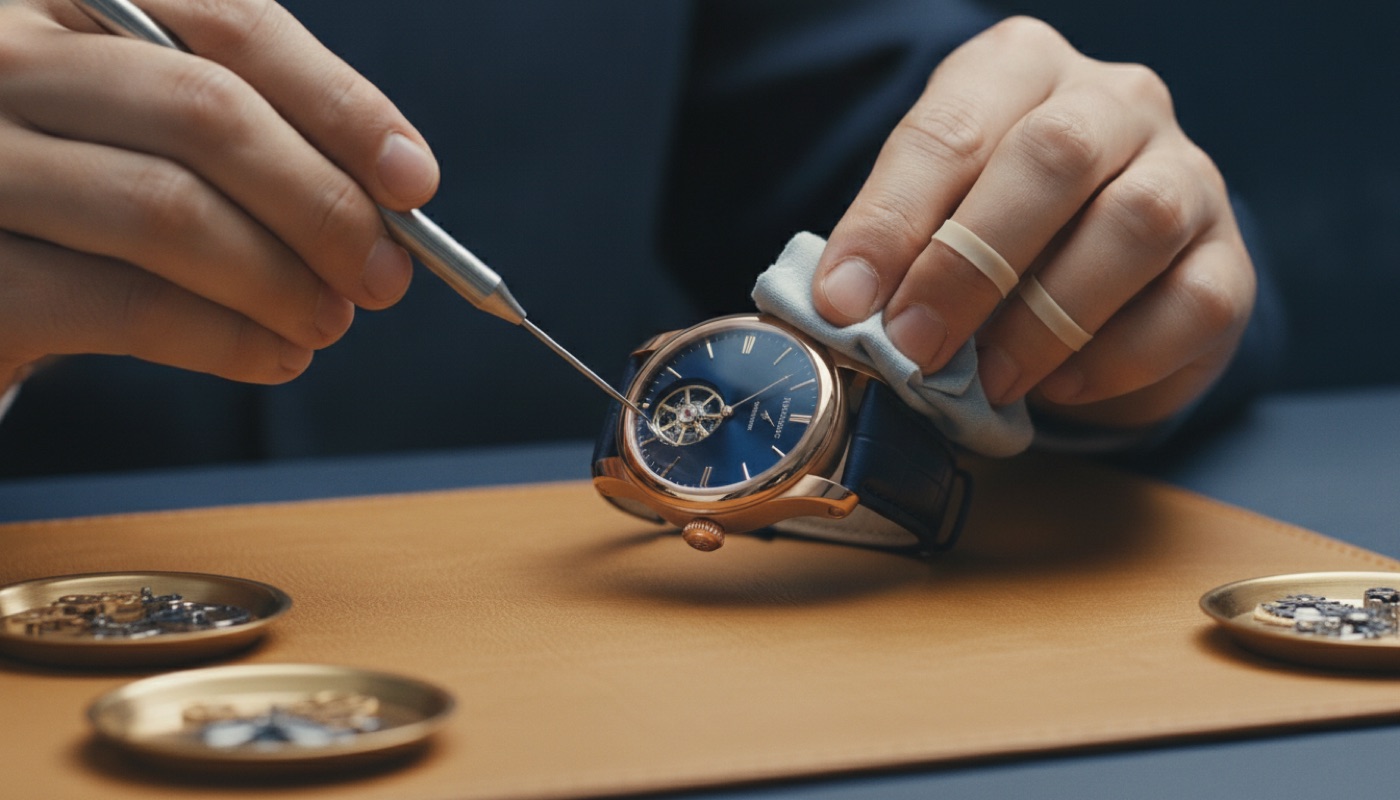
Complexity is charged twice, once at purchase and again for the rest of the watch's life. Extra parts mean thicker cases, longer service visits and larger bills, since a chronograph or perpetual must be stripped, cleaned and reassembled by a specialist. Handling rules multiply too, from the date danger zone to pushers that must stay dry.
The trade is worth making when a function saves you a real daily action. It is worth avoiding when the function only saves you a glance at a phone. For a first serious purchase, our advice on picking a first luxury watch still favours mastering a time-only piece. A steady care routine matters more than the number of sub-dials.
Key takeaways
- A complication is any function beyond the time; a grand complication spans timing, astronomical and striking families.
- Date, GMT, power reserve and moonphase deliver the most usefulness for the money.
- An annual calendar needs one correction a year, a perpetual calendar none until 2100.
- Column wheels, vertical clutches and instantaneous jumps are where chronograph quality actually shows.
- Tourbillons demonstrate craft rather than improving wristwatch accuracy.
Complication is watchmaking's word for ambition, and the vocabulary keeps growing. New calendars, chiming mechanisms and multi-axis cages arrive every year, all built from the same patient logic of levers, cams and springs. However high the ladder climbs, the view from every rung is of one steady machine below, counting out its eight beats a second. Our Watches & Horology journal follows that ladder rung by rung.