Short answer: Keep a luxury watch dry inside, clean outside and serviced on time. Wind it off the wrist, screw the crown down after every adjustment, and keep it away from magnets. Rinse it in fresh water after the sea, clean it monthly, and book a full service every five to ten years.
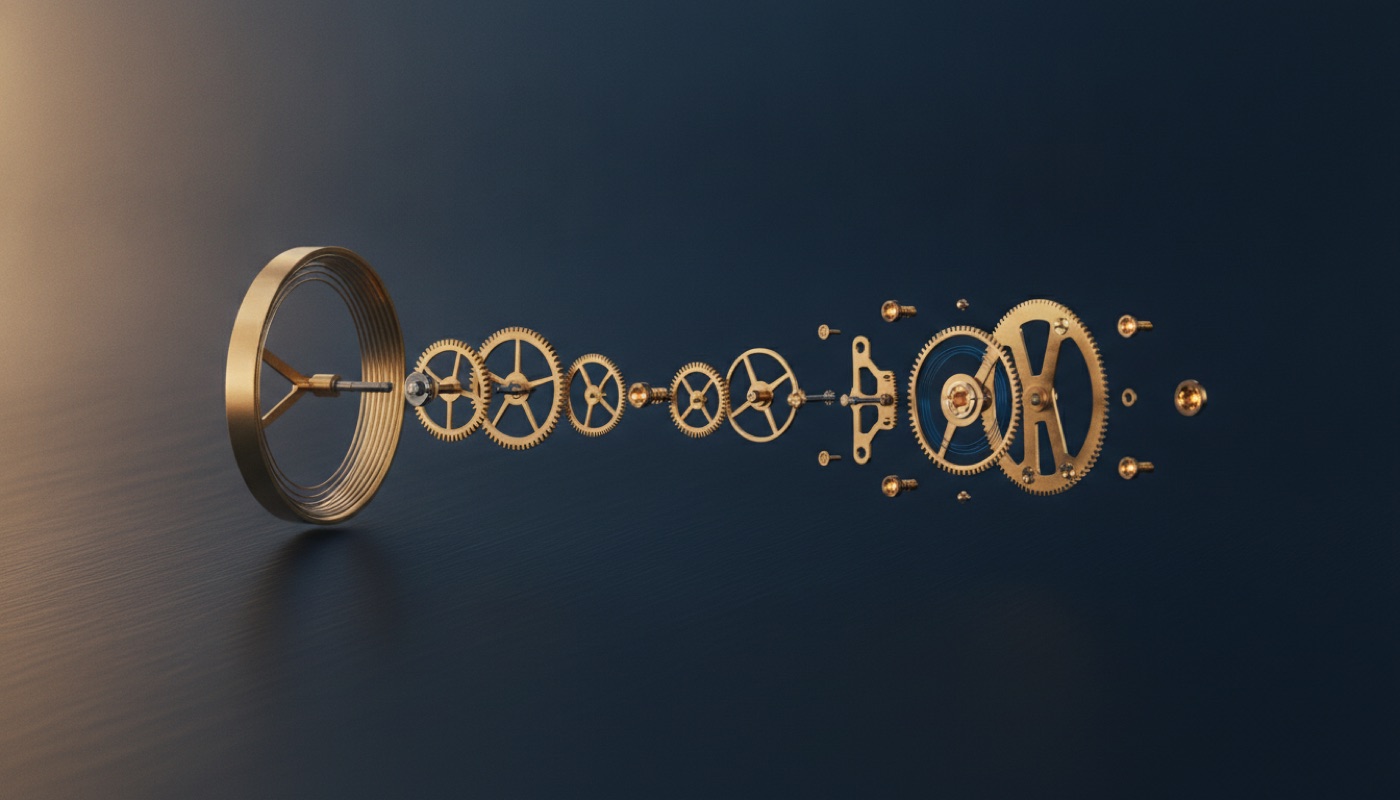
A mechanical watch that beats at 4 hertz swings its balance wheel 28,800 times an hour. Over a year that is roughly 252 million tiny impacts inside a case the width of a coin. Nothing else you own works that hard while being knocked against door frames. Good watches survive it, but only with a little help.
Watches rarely die in one accident. They decline through small repeated insults: a magnet in a laptop lid, a hot shower with a tired gasket, a decade of unchanged oil. Every habit in this guide targets one of those. None is expensive, and most take under a minute.
Everyday handling: the habits that cost nothing
Most avoidable damage happens in the twenty seconds a watch spends in your hands. Winding, setting and closing the crown load the movement's most exposed parts. Get those seconds right and a whole category of repair disappears.
How to wind a watch without straining the stem
The crown is the knob on the side of the case. It sits on the stem, a thin steel rod that reaches into the movement. Winding while the watch is on your wrist bends that rod sideways. Take it off first.
- Hold the crown lightly: use thumb and forefinger, and turn in smooth half-turns rather than fast flicks.
- Stop when a hand-wound watch stops: the mainspring reaches a firm end point, and forcing past it can break the spring.
- Relax about automatics: a self-winding movement has a slipping clutch, so you cannot overwind it.
- Give it about 30 turns after a stop: that is enough for the rate to settle before you set the time.
- Close the crown fully every time: a threaded crown seals only once it is seated against the case. Snug, never forced.
Fit matters too. A bracelet that slides up and down the forearm collects more knocks, because the watch swings into things. Size it so one finger slips under the clasp. Most wrists swell a little through the day, so adjust the fit in the afternoon.
Why the date should never be changed near midnight
On most calendar movements the date wheel begins engaging around 9 pm and finishes around 3 am. Using the quick-set inside that window pushes teeth that are already under load. Sheared date parts are among the most common avoidable repairs.
The safe method takes seconds. Move the hands to roughly 6 o'clock, set the date, then run the time forwards to the hour you want. Forward setting is safe on every modern movement. The calendar train itself appears in our breakdown of dates, calendars and quickset mechanisms.
Tip: Take the watch off for golf, tennis and hammering. Shock protection absorbs random knocks well, but a repeated swing drives the same jolt through the balance pivots hundreds of times an afternoon.
The four things that actually damage a watch
Ask a watchmaker what arrives on the bench and the same four causes repeat. Water, magnetism, shock and old oil explain most non-accidental repairs. Each has a cheap defence.
Water, steam and ageing gaskets
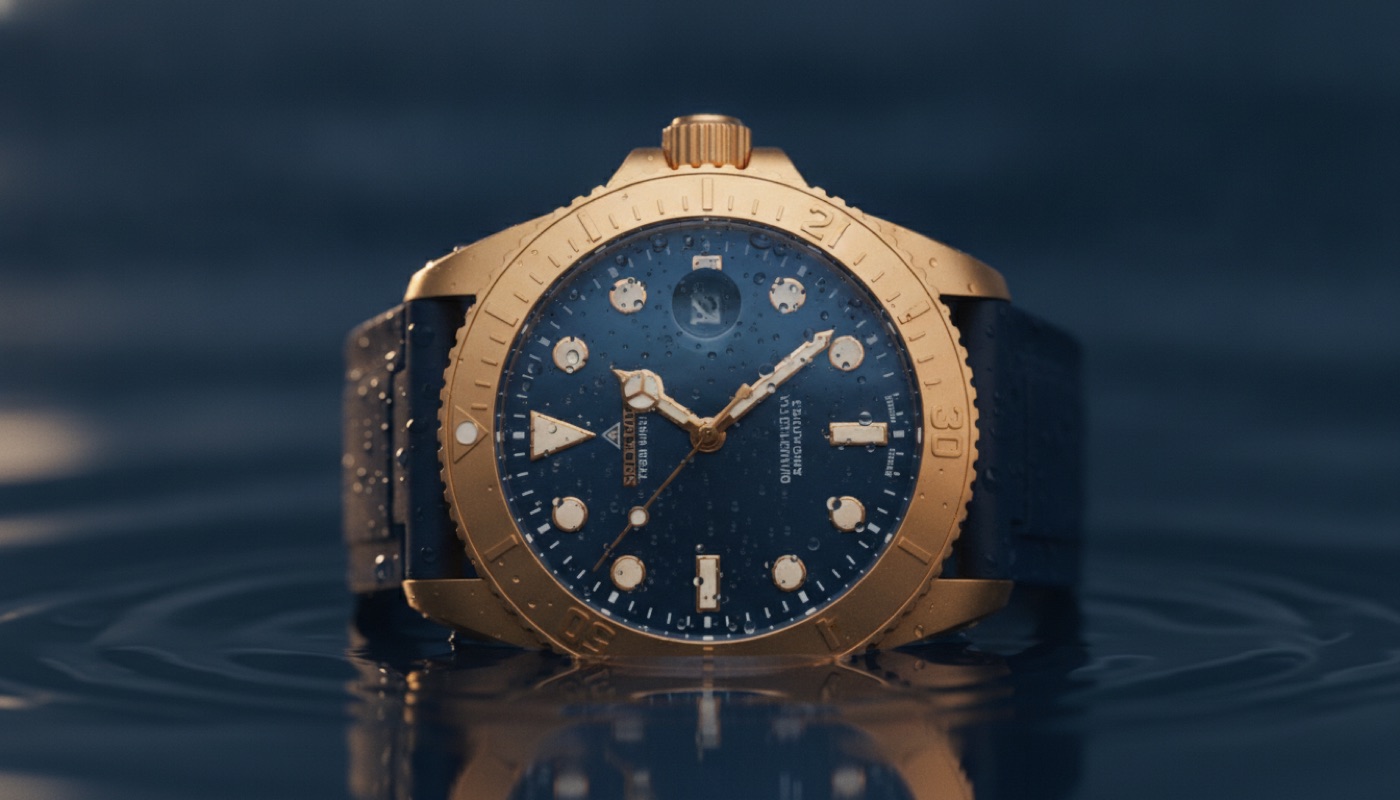
Water resistance is a property of gaskets, the rubber seals at the crown, caseback and crystal. Rubber hardens with age, heat and soap. A watch that was safe for swimming when new may leak five years later if nobody has resealed it. Hot showers are the worst routine offender, because heat expands the seals while detergent degrades them.
Rinse the watch in fresh water after the sea or a chlorinated pool, then dry it fully. Have the seals pressure-tested each year if you swim with it. Dial markings mislead more owners than any other specification, so read how far a depth rating can be trusted before relying on one. True dive watches are certified to ISO 6425, while everyday watches follow ISO 22810 from the International Organization for Standardization. Both test a watch when new, not after years of wear.
Magnetism and the runaway hairspring
The hairspring is a fine coiled spring that sets the timing of every beat. When its coils magnetise they cling together, the working length shortens and the watch races. The symptom is unmistakable: minutes fast per day, not seconds. Laptop lids, tablet covers, speaker magnets and bag clasps are the usual culprits.
The cure is anticlimactic. A watchmaker passes the watch through a demagnetiser and the rate returns within seconds, often for a token fee. Newer calibres resist the problem with silicon or paramagnetic hairsprings, as how the balance and hairspring keep time describes.
Shock, and what to check afterwards
Sprung shock-protection settings hold the balance pivots and absorb ordinary knocks well. They cope less well with a hard corner strike. That can bend a hand, crack a jewel or knock the hairspring out of flat.
After a real impact, watch the piece for a few days. A changed rate, a new rattle, a stopped seconds hand or hands that touch each other all justify an inspection. Small damage left alone becomes expensive damage.
Heat, sunlight and everyday chemistry
Sunlight fades dials and bezel inserts, dries leather and cooks gaskets. Never store a watch on a windowsill or leave it on a car dashboard. Perfume, sunscreen and insect repellent attack leather and can craze older acrylic crystals. Apply them, let them dry, then put the watch on.
A five-minute cleaning routine
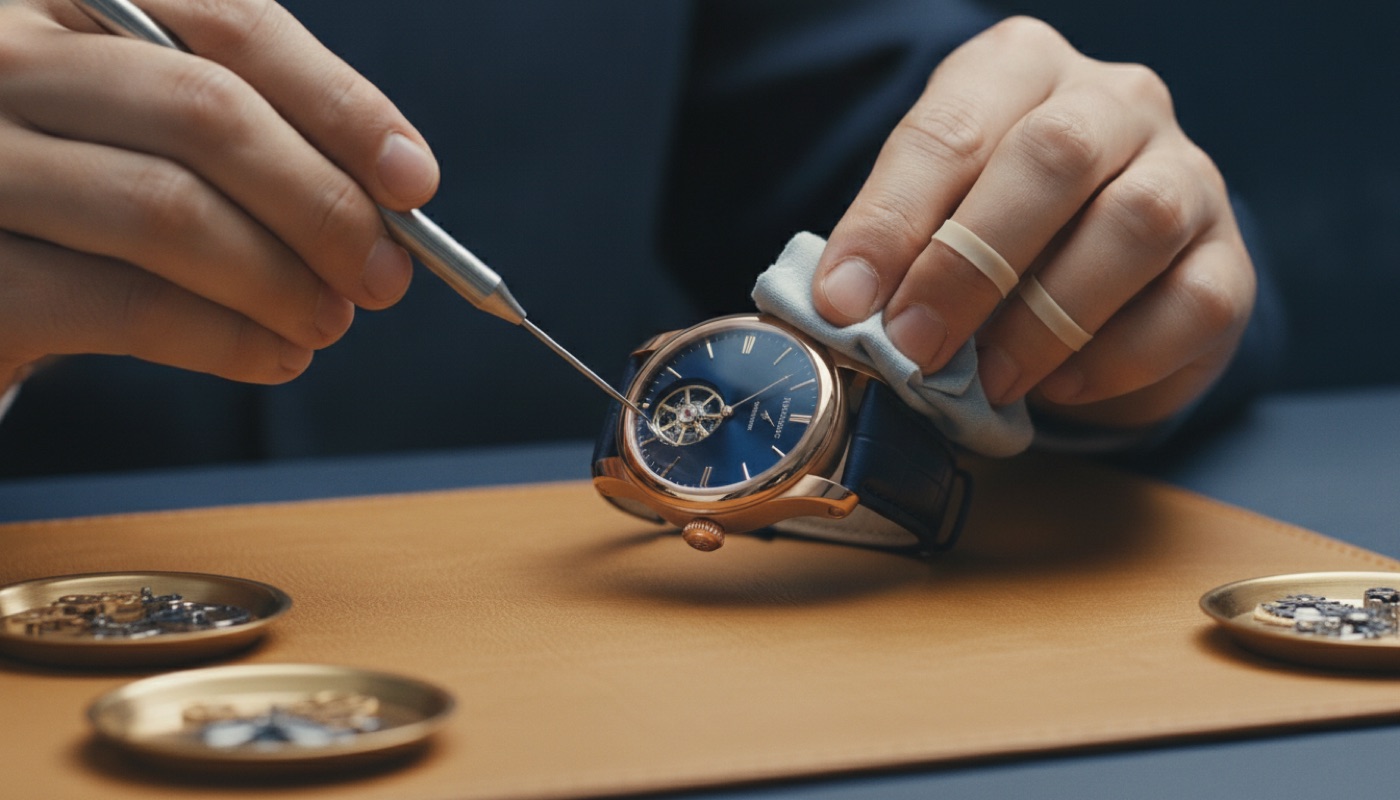
A bracelet collects skin, soap residue and dust, most of it hidden between the links. Left in place, that paste behaves like a mild abrasive. A ten-second wipe with a microfibre cloth each evening removes most of it. Then clean the watch properly once a month, and straight away after seawater.
- Check the water-resistance rating, then screw the crown and any pushers fully down.
- Swish the watch in lukewarm water with a single drop of mild washing-up liquid.
- Work a soft toothbrush along the bracelet links, the lugs and the caseback.
- Rinse in clean fresh water, holding the case rather than the bracelet.
- Dry with a lint-free cloth, pushing it between the links, then air the watch for ten minutes.
Straps need different handling, and the wrong method ruins them fast.
| Strap or bracelet | How to clean it | Typical life | What ruins it |
|---|---|---|---|
| Steel bracelet | Mild soap, warm water, soft brush, dry between links | Refinish rather than replace | Grit trapped inside the links |
| Leather | Barely damp cloth, air dry away from heat | One to two years of daily wear | Immersion, sweat, sunscreen, radiators |
| Rubber or FKM | Full soap and water wash | Three to five years | Solvents, oils, long spells in UV light |
| Nylon (NATO) | Hand wash, then air dry flat | One to two years | Hot machine washes that shrink the weave |
Two leather straps worn on alternate days will outlast three worn one after another, because each gets time to dry. Nylon and rubber take water happily. Leather never does.
Tip: Never dry a damp watch with a hairdryer or on a radiator. Heat pushes moisture inwards past the gaskets and onto the movement. Air drying is slower and far safer.
How often does a luxury watch need servicing?
Synthetic lubricants have stretched the old five-year rule. Most brands now quote five to ten years between full services, and a well-kept watch often reaches the far end of that range. The calendar is only half the answer. The watch tells you the rest.
- The rate changes suddenly: a gain of several minutes a day usually means magnetism, not wear.
- The power reserve shrinks: a watch that once ran 48 hours off the wrist and now stops at 30 has thickening oil.
- The crown feels gritty: that is dirt in the keyless works, grinding parts every time you use it.
- The rotor rattles or grates: automatic winding wears first, because it never stops moving.
- Condensation appears under the crystal: book the watch in this week. Moisture rusts steel parts within days.
A watch rarely fails all at once. It drifts, then whispers, then stops, and the service postponed becomes the restoration commissioned.
What a full service includes, and what it costs
Knowing what happens on the bench makes the invoice easier to read. A full service is a controlled rebuild rather than a repair.
- The movement is stripped to individual components and lifted out of the case.
- Every part is cleaned ultrasonically in dedicated solutions.
- Worn parts and all gaskets are replaced.
- Each pivot and jewel is oiled with the prescribed lubricant, several different oils in their own places.
- The watch is reassembled, regulated in multiple positions and timed over several days.
- Case and bracelet are refinished on request, then the watch is pressure-tested.
Spread across a ten-year interval, that bill works out at roughly one strap a year. It is fair rent on a machine built for generations. The discipline behind it echoes tolerance and testing in precision engineering. Measuring the work matters as much as doing it.
Be clear about what a service does not do. It will not remove case scratches unless you ask for refinishing, and it will not restore a faded dial. On an older watch, say plainly that the dial and hands are to be left untouched. Honest patina is worth more than a fresh reprint, in memory and in resale.
Where you go matters as much as when. Brand service centres guarantee original parts at factory prices. Good independent watchmakers often match the workmanship for less. Ask three questions anywhere: are original parts used, what does the guarantee cover, and is your calibre familiar to this bench? Standards and part-sourcing conventions vary by country, which is part of what the Swiss made label really promises. The Federation of the Swiss Watch Industry is a useful place to look for accredited workshops.
Quartz watches: different machine, different risks
A quartz movement drives its hands with a tiny stepper motor and asks far less of you than a mechanical one. The risk shifts to the battery. A dead cell left inside the case can leak alkaline electrolyte, which corrodes the circuit board and the movement plate. Replace the battery within a few weeks of the watch stopping.
Two more habits matter. Have the battery changed by someone who reseals the case and pressure-tests it, because opening the back breaks the water seal. And keep the same gasket discipline as before: a quartz diver leaks exactly as readily as a mechanical one. Many quartz calibres also carry an end-of-life indicator, jumping the seconds hand in four-second steps when the cell runs low. Treat that as a two-week warning.
Four care myths that reach the workbench
- An automatic must never be allowed to stop. Stopping harms nothing. A still watch is a pause, not a decline.
- You can overwind an automatic. The slipping clutch prevents it. Only hand-wound movements have a hard stop to respect.
- 30 metres is enough for the pool. It is not. That rating covers splashes and rain, and little else.
- A polish always improves a watch. Polishing removes metal and softens case edges. Steel can be refinished, but ceramic and sapphire cannot, as our guide to watch case materials explains.
Storage, winders and travel
Unworn watches want what archives want: cool, dry, dark and stable. The original box in a drawer meets every requirement. In a humid climate, add a silica-gel sachet and change it yearly. Store pieces so they cannot touch, because a sapphire crystal will scratch a steel case without noticing.
A watch winder is a convenience, not a health measure. It earns its keep on perpetual calendars and other complications that are tedious to reset. A simple three-hand date watch, like the everyday pieces in the Targa Watches collections, resets in ten seconds. During long storage, wind each watch and let it run for a day every month or two, so the oils keep moving.
Travel adds two small risks. Baggage handling means hard knocks, so keep a watch on your wrist or in a padded roll in hand luggage. Aircraft cabins are dry, which suits watches well; hot cars and sunny hotel windowsills do not.
Records deserve the same discipline as the watch. Keep the box, warranty card and service receipts together. Note the serial number somewhere separate from the watch, and photograph the piece front and back. Ten minutes of paperwork underwrites an insurance claim and simplifies any future sale.
Key takeaways
- Wind off the wrist, never force a crown, and never quick-set the date between 9 pm and 3 am.
- Water, magnetism, shock and stale oil cause nearly all avoidable damage.
- Clean monthly with mild soap, fresh water and a soft brush, with leather as the exception.
- Service every five to ten years, and sooner if the rate, power reserve or crown feel changes.
- Condensation under the crystal is urgent, a winder is optional, and cool dark storage is not.
Care gets easier once you understand what you are caring for. An owner who can describe a symptom precisely is rarely oversold at the service counter. If you are still choosing, our guide to picking a first serious watch covers the decisions that shape maintenance for years afterwards. Everything we have written on upkeep sits together on our maintenance topic page, and the Watches and Horology journal takes the longer questions. The machine is built for a century. You are simply its current custodian.