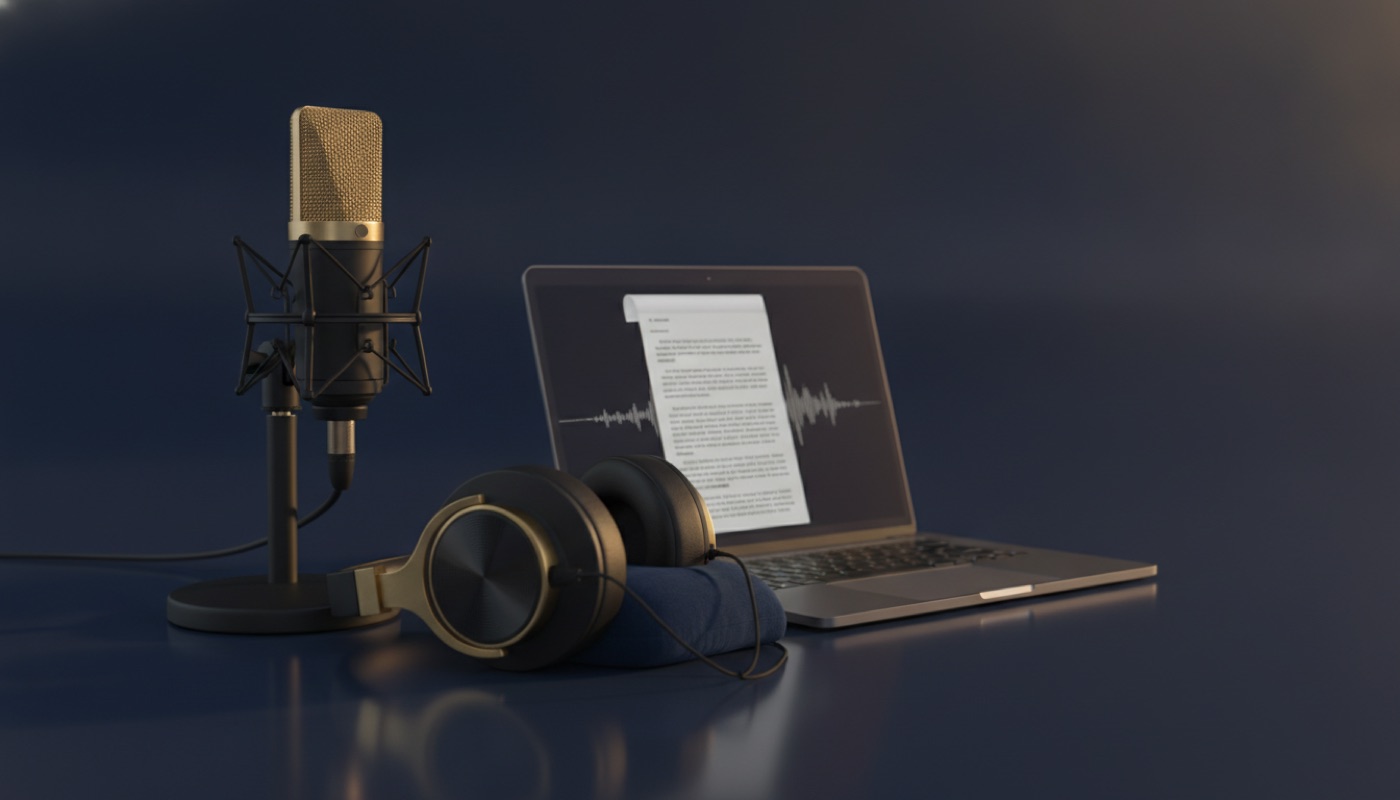
Good transcripts are made before the recording starts. Microphone placement, room choice and a little speaker discipline decide more about your final accuracy than any setting in any software. Fix the input and the output mostly fixes itself.
What actually moves the accuracy needle
| Decision | Effect on accuracy |
|---|---|
| Microphone within 30 cm of the speaker | Large — the single biggest factor |
| Hard-surfaced room versus soft furnishings | Large — echo confuses models |
| One speaker at a time | Large — overlap causes most lost words |
| Naming unusual terms up front | Moderate — helps the language model |
| Recording format and bitrate | Small, above a reasonable threshold |
Then match the workflow to the job
An interview needs verbatim accuracy and speaker labels. A team meeting needs decisions and owners, not every "um". A video needs timed caption files with line breaks a viewer can read. These are three different tasks that happen to start from audio.
Know when to pay a human
For legal, medical or broadcast work, the cost of one wrong word is higher than the cost of a human pass. Everywhere else, an AI draft plus your own edit is usually faster and cheaper than either option alone.
Microphone placement, room noise and speaker discipline decide more about the final accuracy than any software setting.These guides are practical: how to record and transcribe an interview, how teams handle meetings, how caption files are structured, and when to pay a human instead.