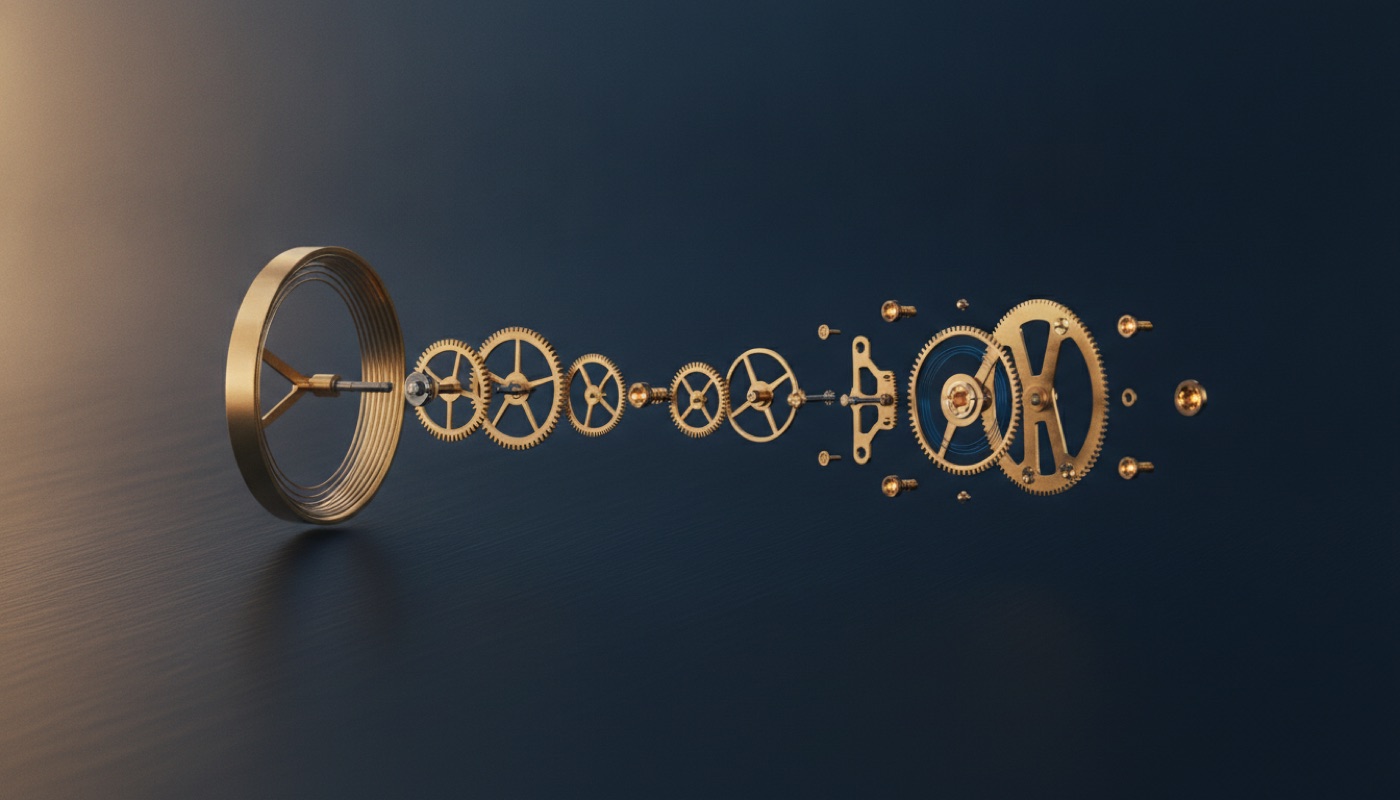
A mechanical movement does three jobs. It stores energy, it moves that energy along, and it lets the energy out in equal portions. The mainspring stores. The gear train moves. The escapement releases. Every other feature a watch has is built on top of those three jobs.
Start with the escapement
The escapement is the part that makes a watch a clock rather than a spring that unwinds. It stops the gear train and releases it, several times a second. That tick is the sound of energy being rationed. Get the escapement right and the watch keeps time; get it wrong and nothing downstream can save it.
Then read the dial as an output device
Anything a watch shows beyond hours, minutes and seconds is called a complication. A date window is a complication. So is a chronograph, a moonphase and a tourbillon. Each one adds parts, and every added part is another thing to lubricate, adjust and eventually service.
Why watchmakers talk about tolerances
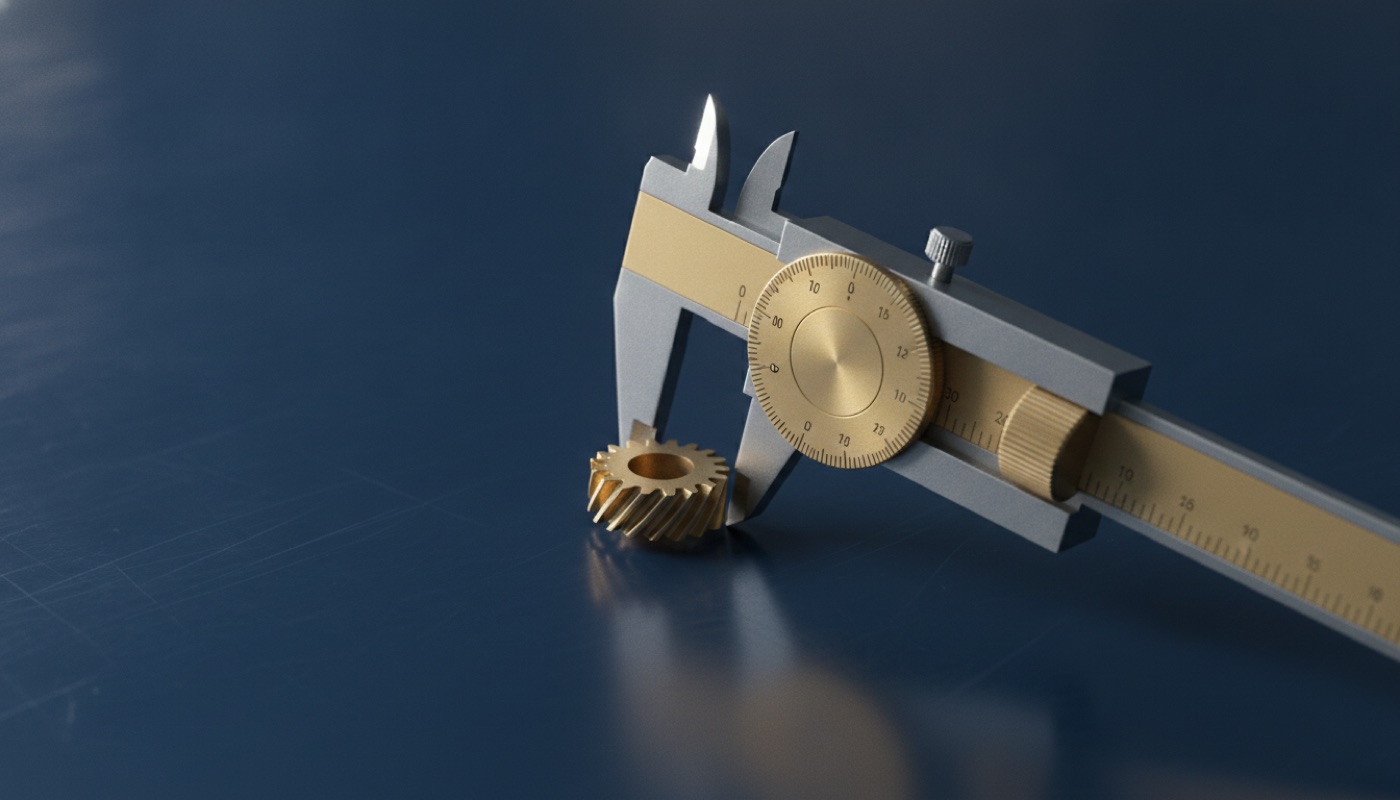
A movement is judged against a number: seconds gained or lost per day. That single figure hides a great deal of work. Components are finished to fractions of a millimetre, then assembled, then regulated in several positions. It is the same discipline any precision industry uses, and it travels well beyond watchmaking.
Where to begin: read how a movement works first, then complications, then tolerance and testing. In that order each guide answers a question the previous one raises.
These guides open the case back. They explain the parts by name, show why a movement is measured in seconds per day, and connect that engineering to the tolerances any precision product is held to.