Short answer: A water-resistance rating records a short pressure test in a laboratory, not a safe diving depth. A 30 m watch handles rain and hand-washing. 50 m allows brief surface swimming. 100 m is the sensible baseline for regular swimming and snorkelling. Scuba diving calls for a watch certified to ISO 6425.
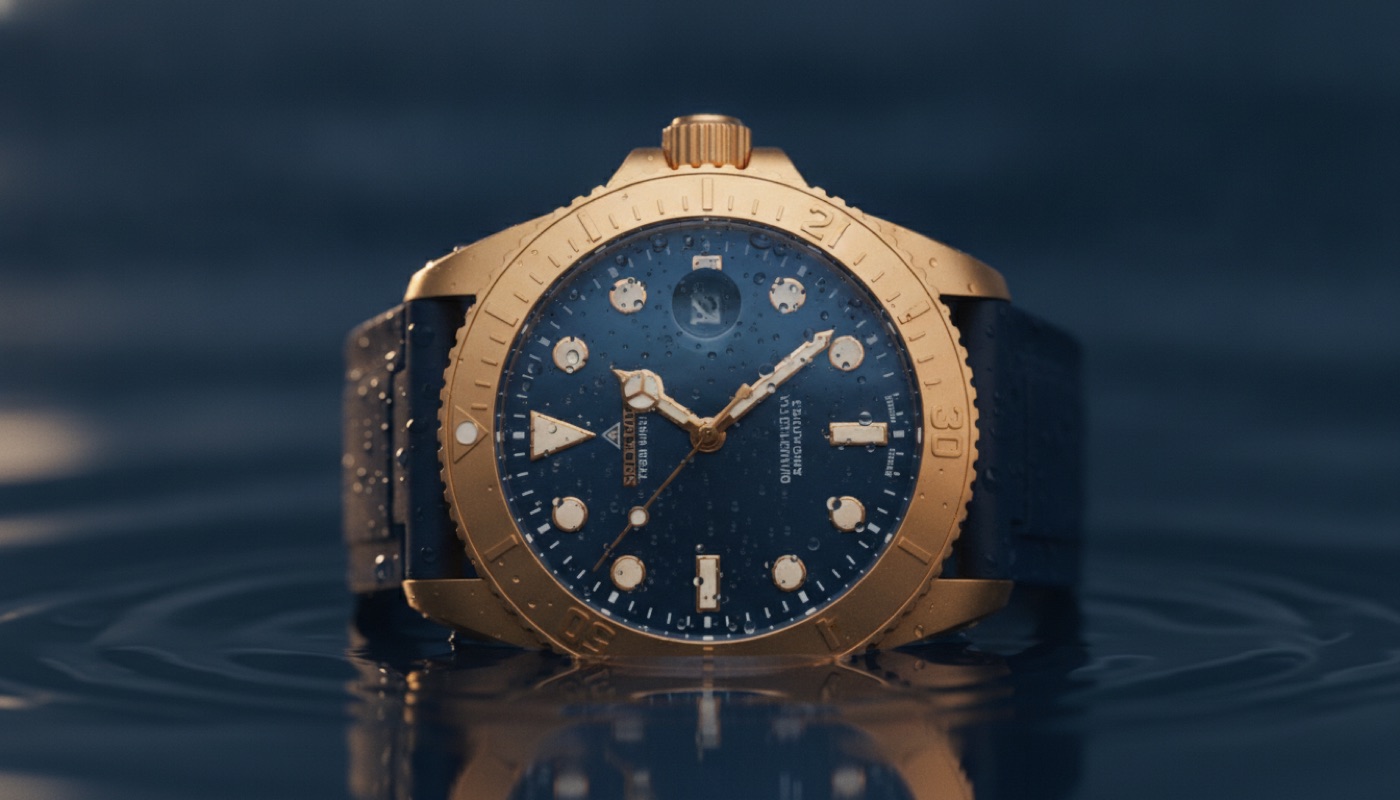
A watch marked 30 metres water resistant should never be taken 30 metres underwater. It should not really go swimming either. That single fact clears up most of the confusion around water resistance. The figure printed on a dial or engraved on a caseback is not a depth promise. It is the record of a static pressure test, run on a brand-new watch, under laboratory conditions.
Water is still one of the most common causes of serious watch damage. A few drops inside a case can rust steel parts and stain a dial. A routine service then turns into an expensive restoration. The system itself is not hard to decode. Two international standards, a handful of small seals and a short list of habits explain nearly all of it.
What the numbers on the dial actually mean
Water resistance is quoted in metres (m), bar or atmospheres (atm). All three units measure pressure, not distance. One atmosphere is roughly the extra pressure created by ten metres of water. So 5 atm, 5 bar and 50 m are one claim written three ways. Many casebacks print two of them side by side.
Marketing departments prefer metres, because the number looks larger. Engineers prefer bar, because it names the quantity being measured. A caseback stamped 10 bar has passed the same test as one stamped 100 m. To convert, simply divide the metres by ten.
Why the laboratory figure flatters the watch
During the test the watch sits still inside a pressure chamber. The water is cool and clean. The gaskets are new and the crown is fully seated. Pressure rises to the rated level, holds for a few minutes, then falls. Nothing strikes the case, and nobody pulls the crown out.
Swimming is far less polite. Moving water adds pressure of its own, so a fast arm stroke can briefly exceed the rated figure. A hot shower expands the seals, and cooling then draws damp air back through them. Soap lowers the surface tension of water and helps it find smaller gaps. The rating describes the best day of a watch's life, never an average one.
The number on the dial is not a promise of depth. It is the memory of one laboratory test on a brand-new watch.
How much water resistance do you need?
Most owners need less depth than they imagine, and buy less margin than they should. The table below turns each common marking into everyday language. Read it as guidance for a watch in good order, with seals that have been tested recently.
| Marking | Equivalent | Comfortable with | Keep it away from |
|---|---|---|---|
| 30 m | 3 bar / 3 atm | Rain, hand-washing, a spilled drink | Swimming, showers, snorkelling |
| 50 m | 5 bar / 5 atm | A brief swim at the surface, a rinse under a tap | Hot tubs, diving, daily pool sessions |
| 100 m | 10 bar / 10 atm | Swimming, snorkelling, sailing, surf | Scuba diving with compressed air |
| 200 m | 20 bar / 20 atm | Recreational scuba diving, if the watch meets ISO 6425 | Saturation diving in a helium habitat |
| 300 m and above | 30 bar and up | Professional and technical diving | Very little, in practice |
Two thresholds carry most of the meaning. The step from 30 m to 100 m is the one that changes daily life. At 100 m a healthy watch can be swum with and then forgotten. The step from 100 m to 300 m buys margin rather than new activities.
That margin still counts for something. A deeper rating usually signals a thicker case, a screw-down crown and a maker who takes sealing seriously. It is one of several specifications worth weighing up in how to choose your first luxury watch.
Tip: Buy for your worst day, not your average one. If a watch will ever see a beach or a hotel pool, choose 100 m with a screw-down crown and stop thinking about it.
The two standards behind the marking
Behind every marking sits one of two international standards. They are written by the International Organization for Standardization, and they are not equally demanding.
ISO 22810: the everyday water resistant mark
Ordinary watches follow ISO 22810. The standard sets the overpressure test, the immersion checks and the wording a brand is allowed to print. It defines what the Water Resistant mark may claim. It is a workable rule with two clear limits. Makers may test a sample rather than every watch. And the standard says nothing about how a case behaves after five years of wear.
ISO 6425: what earns the word Diver's
Watches sold for diving answer to ISO 6425, which is far stricter. The standard is voluntary, but the wording on the dial is not decorative. A dial reading Diver's 200 m is making a specific, testable claim. To make it, a watch must satisfy every item below.
- A minimum rating of 100 m. Nothing shallower may carry the word Diver's.
- Testing of every single watch. Each unit is pressurised past its rated depth, not one sample per batch.
- A condensation check after thermal shock. The case is heated, cooled and inspected for moisture under the crystal.
- Legibility in total darkness. The time must be readable at 25 centimetres, along with a clear sign that the watch is running.
- An elapsed-time control. Usually a unidirectional bezel marked in minutes, so a knock can only shorten a dive, never lengthen it.
- Resistance to salt water, magnetism, shock and strap strain. The strap or bracelet must survive a defined pull force at the lugs.
That checklist explains part of the price gap between a diver and a dress watch. Testing every unit costs more than testing a sample, a trade-off examined in why sampling is cheaper than checking everything. The same logic runs through origin labels and quality marks, which we unpack in what Swiss Made really certifies.
The hardware that keeps water out
A rating is a claim. The parts below are what has to honour it, and they are the reason a case survives a swim or does not.
Gaskets, crowns and casebacks
Water resistance is not a property of a number. It is a property of parts. Small rings of nitrile rubber, silicone or fluoroelastomer sit at the caseback, around the crown tube, under the crystal and behind every pusher. Those rings carry the entire load.
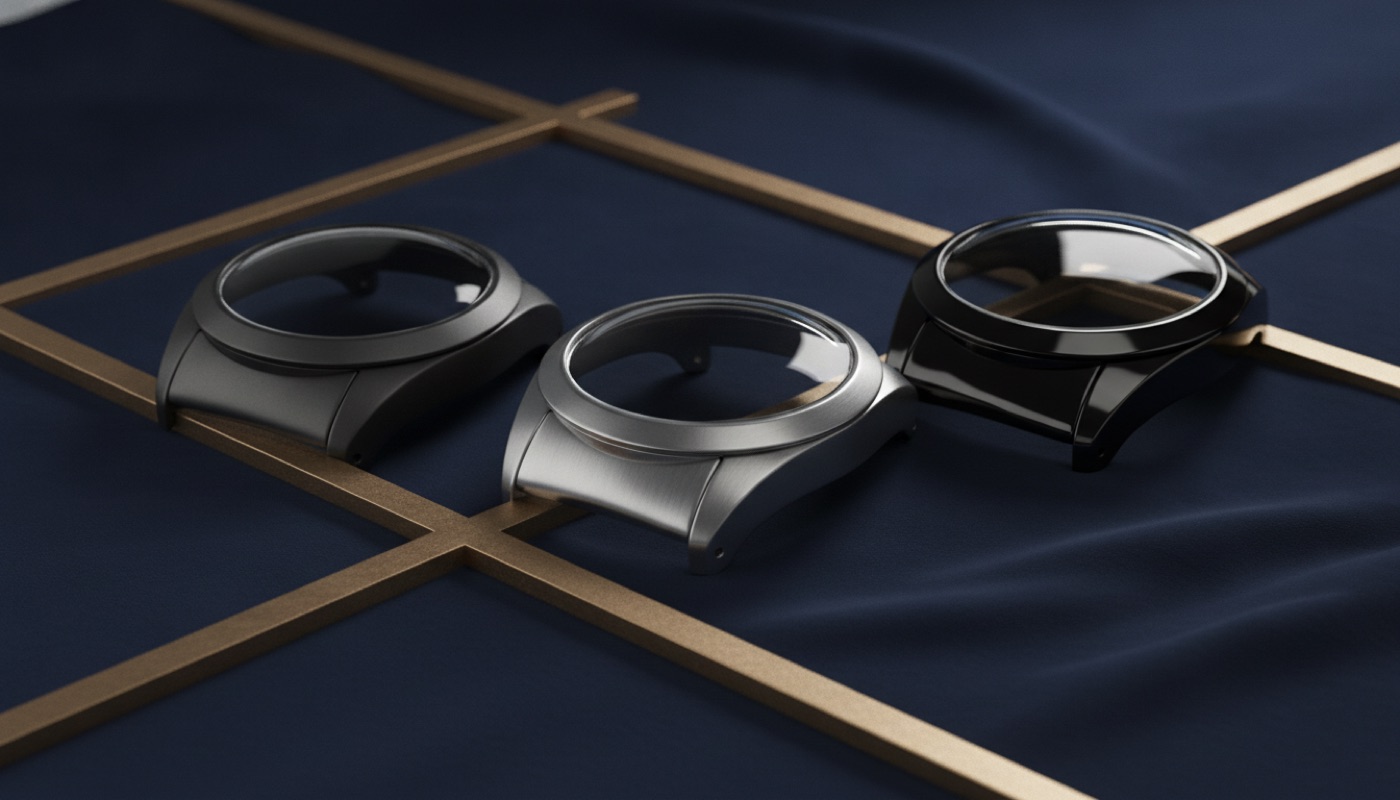
The case architecture supports them. A screw-down caseback compresses its gasket evenly around the full circle. A screw-down crown threads onto a tube fixed to the case, so its seals stay under constant pressure instead of relying on friction. Each extra opening adds risk. A chronograph brings two pushers, and a quick-set date brings another aperture, which is one reason complicated watches often carry lower ratings. Our survey of watch complications covers what those extra functions demand of a case.
That architecture dates to 1926, when the Rolex Oyster made a screwed, gasketed case commercially viable. The recipe itself has barely changed since. What has changed is the material list, now built around corrosion-resistant alloys and synthetic crystal, which the watch materials guide sets against each other.
The helium escape valve, and who needs one
Saturation divers live for days inside pressurised chambers, breathing a helium-rich gas mix. Helium atoms are small enough to creep past gaskets and into the case. During slow decompression that trapped gas expands and can push the crystal off. A one-way valve vents it harmlessly. Unless you commute to work from a diving bell, it is engineering as conversation piece.
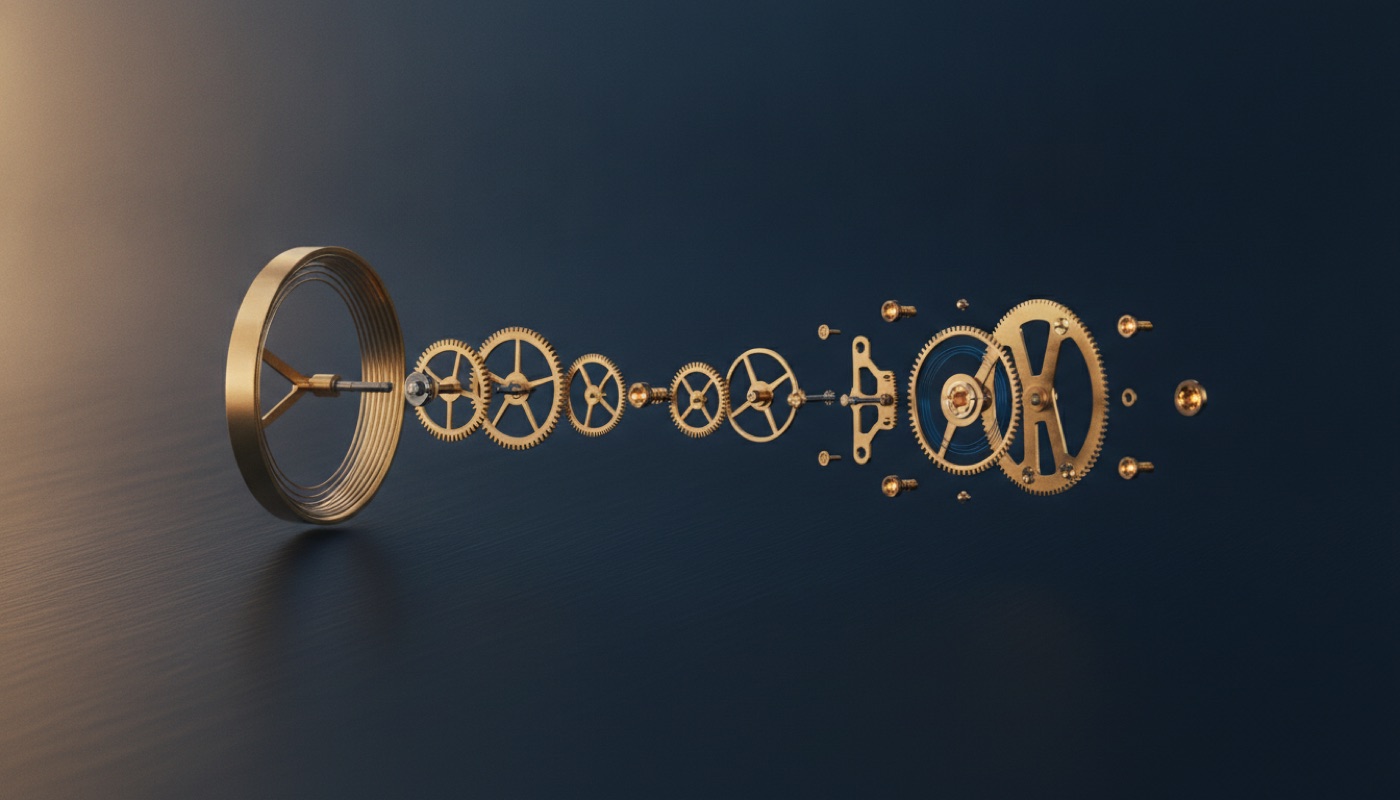
It helps to remember what all these seals protect. A mechanical calibre holds hundreds of finely finished steel and brass parts, laid out in our anatomy of a mechanical calibre. Almost none of them tolerate moisture. Rust on a hairspring is not polished away. The part is replaced, if a replacement still exists.
Six habits that matter more than the rating
Most water damage has nothing to do with depth. It comes from small, avoidable moments. These six rules will protect a watch better than any number on the dial.
- Never operate the crown or pushers in water. An open crown is an open door. Set the time on dry land, and check the crown before your hands go near a tap.
- Screw the crown fully home, every time. A screw-down crown seals only when it is seated. Half-threaded means unsealed.
- Keep the watch out of hot water. Showers, baths, saunas and hot tubs combine heat, steam and soap. Heat softens gaskets, and temperature swings pull humid air past them.
- Rinse after the sea or the pool. Salt crystals form as water dries and abrade the seals. Chlorine attacks rubber. Thirty seconds under a cold tap costs nothing.
- Mind the chemistry. Perfume, sunscreen, insect repellent and cleaning solvents all degrade gasket material. Apply them before the watch goes on, not after.
- Treat fogging as an emergency. Condensation under the crystal means water is already inside. Take the watch to a watchmaker the same week, before corrosion starts.
Five myths worth retiring
Water resistance attracts confident advice, much of it wrong. These five claims cause the most damage.
- Waterproof is a real category. It is not. No seal lasts forever, so regulators and standards bodies pushed the word out of use decades ago. Every watch is water resistant to a degree and a date.
- A big number rescues a tired gasket. It does not. A 300 m diver with a perished crown seal will flood in a paddling pool. The rating describes the case as tested, not the case on your wrist today.
- Vintage watches keep their original rating. Assume the opposite. Rubber hardens over decades, and a 1960s caseback marking means nothing now. Treat any unserviced vintage watch as having no water resistance at all.
- Quartz watches survive water better. They do not. A quartz circuit corrodes as readily as a hairspring, and a battery change opens the case once every two years or so. Each opening is a chance for a seal to be pinched or missed.
- The strap does not matter. It does. A 200 m case on a leather strap is still a poor swimming watch, because the leather stretches, rots and holds salt against the lugs. Rubber, silicone or a steel bracelet belongs in water.
How to keep a rating true
Gaskets are consumables, like brake pads. They harden, compress and crack with age, however carefully a watch is treated. Water resistance is therefore a condition to maintain, not a feature bought once.
Dry test or wet test?
A watchmaker has two checks. A dry test places the watch in an air-pressure chamber and measures microscopic deformation of the case. It detects a leak without ever wetting the movement. A wet test submerges the pressurised case and watches for escaping bubbles. Most workshops run the dry test first, then confirm with the wet test. Both take minutes.
A schedule that works
- After any case opening, including quartz battery changes, strap swaps that disturb the caseback, and every repair.
- Once a year for any watch that swims. Test it before the summer, not after.
- At every full service, when gaskets are replaced as routine. That schedule appears in our complete luxury watch care guide and across the rest of our watch care coverage.
Tip: Ask the watchmaker for the pressure the watch was actually tested to, and note the date. A rating you can date is worth far more than a rating you can only read.
Key takeaways
- A rating records a static laboratory test on a new watch, not a safe diving depth.
- Metres, bar and atmospheres are the same scale: 100 m equals 10 bar equals 10 atm.
- 30 m means splashes only, and 100 m is the sensible baseline for regular swimming.
- Only watches tested to ISO 6425 may be called Diver's, and every unit is tested individually.
- Gaskets age quietly, so pressure-test after any case opening and yearly if the watch swims.
Buy the rating that fits the life you actually lead, keep the seals young, and water stays where it belongs. If you are shopping, check the caseback marking and the crown type before anything else, including across the Targa Watches range. For movements, materials and maintenance, keep reading in the Watches & Horology hub.