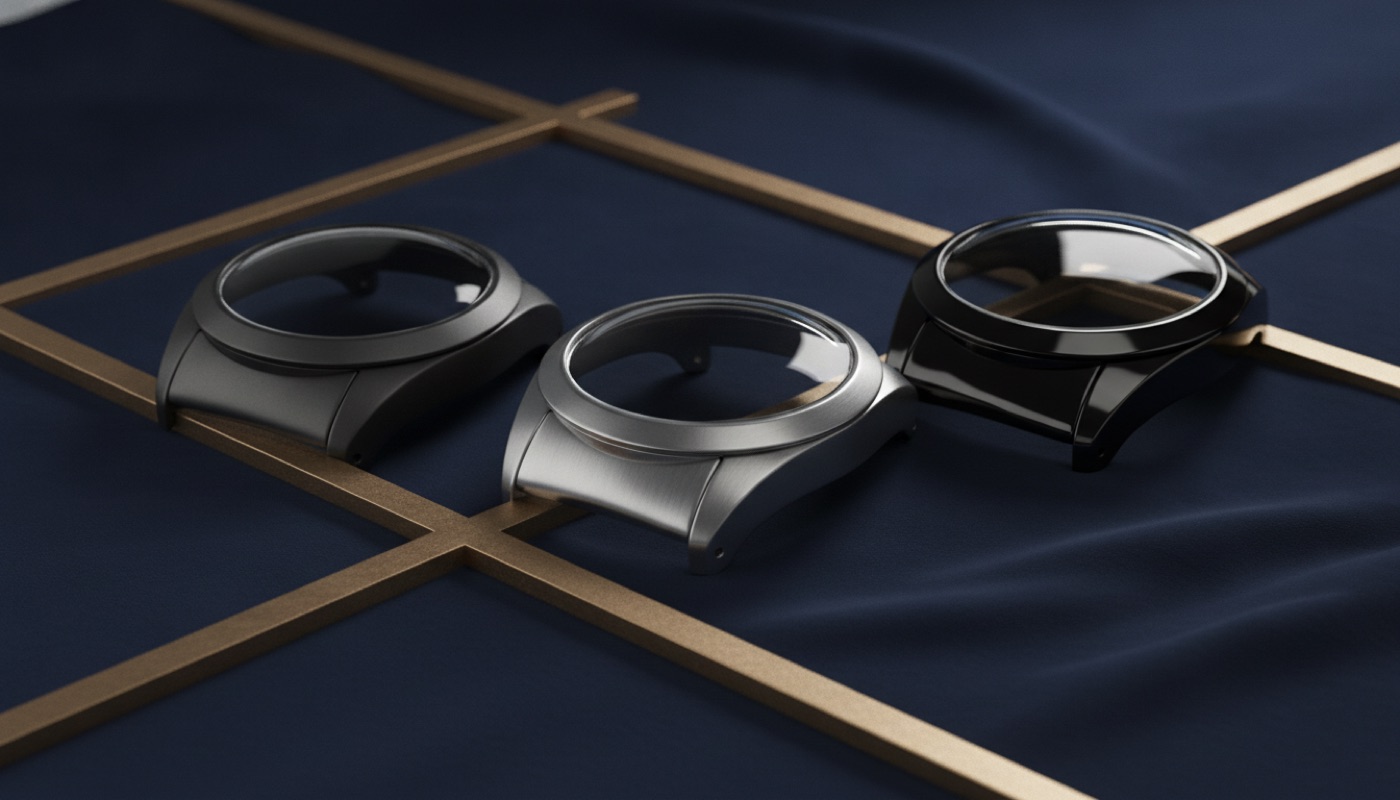
Short answer: Steel is tough and can be polished back to new. Titanium weighs about 43 per cent less and suits sensitive skin. Sapphire scores 9 on the Mohs hardness scale, so it almost never scratches. Ceramic keeps its colour for life but can crack if dropped. Hardness and toughness pull in opposite directions.
Two watches leave the same shop on the same day. Five years later one is a web of fine scratches, and the other still looks new. Nothing in the movements explains that. The materials do.
A watch is a set of surfaces you touch every day. The case, bezel, bracelet and crystal decide how heavy it feels and how it takes a knock. They also decide what a decade of desks and door frames writes on it.
Spec sheets list 316L steel, Grade 5 titanium and sapphire crystal as though the names explained themselves. They do not. This guide translates each one, corrects four common myths, and ends with a way to match material to your own week.
Hardness and toughness are not the same thing
Two separate virtues hide inside the word durable. Hardness is resistance to scratching. Mineralogists rank it on the Mohs scale, which runs from talc at 1 to diamond at 10.
Toughness is something else: the ability to absorb a blow without cracking. Almost no material scores well on both. As a rule, the harder a substance becomes, the more brittle it behaves.
Hardness matters for an unglamorous reason. Ordinary household dust contains quartz, which sits at 7 on the Mohs scale. Any surface softer than quartz is slowly abraded simply by being wiped, brushed and worn.
The quartz line is the one that matters. Sapphire and ceramic sit above it, so daily life leaves them alone. Steel and acrylic sit below it, so daily life marks them.
Ordinary dust carries quartz at Mohs 7. Any watch surface softer than that is only negotiating the pace of its own scratching.
Why brittle materials fail differently
A tough material bends or dents. A brittle one stores the energy of an impact until it cracks. Steel meets a door frame and gives you a dent that a watchmaker can polish away later.
Sapphire and ceramic do not bend at all. A sharp strike on an edge can chip or shatter them while the rest of the part still looks perfect. Hard and safe are not synonyms.
The case metals: steel, titanium, gold and bronze
Four metals cover almost the whole watch market. Each one trades weight, hardness, comfort and price in its own way.
316L and 904L stainless steel
316L is the default case material of modern watchmaking. It is an austenitic stainless steel alloyed with chromium, nickel and molybdenum. The chromium forms an invisible oxide film that seals the surface against rust, which is what the word stainless describes.
The molybdenum extends that protection against salt and sweat. The same alloy family serves in surgical instruments and marine fittings. At roughly 8 g/cm³ it feels substantial on the wrist, and it dents rather than cracks.
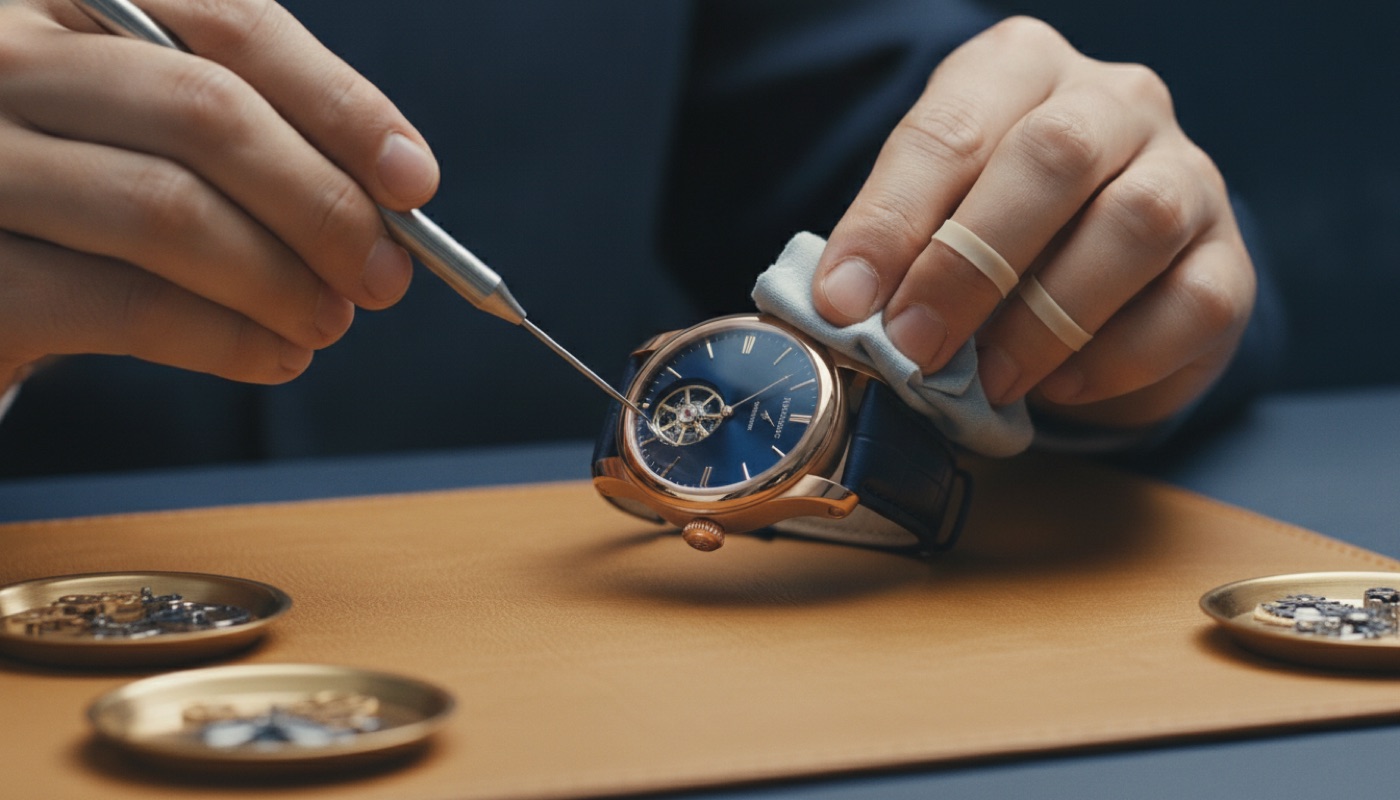
Steel's real advantage is repair. A watchmaker can re-grain a brushed surface and re-polish a mirrored one during a service. Our complete watch maintenance guide sets out how often that is worth doing. Ceramic and sapphire never offer the option at all. A few makers use 904L, a richer grade with more chromium and nickel that polishes brighter and resists corrosion harder still.
Grade 2 and Grade 5 titanium
Titanium's headline is arithmetic. At about 4.5 g/cm³ it weighs roughly 43 per cent less than steel for the same volume, with comparable strength. A large dive watch that drags in steel becomes an all-day companion in titanium.
The metal is nickel-free and biocompatible, so it suits reactive skin. Britannica's entry on titanium notes its standard use in surgical implants. Its low thermal conductivity brings a quieter pleasure: no cold shock on a winter morning.
Watchmaking uses two grades. Grade 2 is commercially pure titanium, softer, with a warm matte grey tone. Grade 5 is alloyed with aluminium and vanadium, which makes it harder and brighter in finish. Bare Grade 2 marks more readily than steel, though surface-hardening treatments narrow that gap considerably.
Gold, bronze and the metals that record a life
Gold is dense, soft and precious. Watch cases normally use 18-carat alloys, which are 75 per cent pure gold mixed with copper, silver or palladium for colour and strength. It scratches easily and weighs around 15 g/cm³.
Bronze does the opposite of resisting time. This copper-tin alloy grows a brown-green patina shaped by the wearer's own chemistry and climate. Some owners polish it back; most learn to like it. Both metals suit people who want a case with a memory.
The crystal: acrylic, mineral glass and sapphire
The window over the dial has climbed the hardness ladder for a century. Acrylic came first. It is soft at about Mohs 3, warm in tone, and endlessly re-polishable with a cloth and a little paste.
Mineral glass followed at 5 to 6 on the scale. It is cheap, clear and hardened by heat or chemistry, but it scratches and, once scratched, cannot be restored.
Sapphire is now the standard for fine watches. It is synthetic corundum, or crystalline aluminium oxide, chemically identical to the gemstone minus the trace elements that give it colour. Makers grow it in furnaces, then slice and polish it with diamond tools.
At Mohs 9, only diamond and a few synthetic abrasives mark it in daily life. The price is brittleness. A sharp edge strike can crack sapphire where acrylic would simply flex. That is why shatter-safe acrylic stayed on tool and pilot watches long into the sapphire era.
Sapphire is no longer confined to the front of the watch. Display case backs are now routine, and box-shaped domed crystals have returned as a design flourish. A few makers machine entire cases from single blocks of it. Every one of those uses relies on diamond tooling, which is why sapphire parts stay expensive.
Anti-reflective coatings and what actually wears
Most sapphire crystals carry a thin anti-reflective coating that cuts glare and lifts contrast. Applied to the underside, it stays protected for the life of the watch. Applied to the outer face, it works better but wears into visible patches over years.
Tip: A mark on a sapphire crystal is usually not a scratch. Metal transferred from something softer, such as a lift door, often wipes off with a soft cloth and a drop of water.
Ceramic, PVD and DLC: colour that does not fade
Watch ceramic is not pottery. It is normally zirconium dioxide, known as zirconia, pressed from fine powder and sintered at extreme temperature. The result is far harder than any steel, at roughly 8 to 8.5 Mohs.
The colour runs through the material instead of sitting on top, so it cannot fade. Ceramic also cannot corrode, and in normal wear it does not scratch. That is why modern dive bezels are ceramic rather than the anodised aluminium inserts that bleached in sun and salt.
Sintering shrinks a ceramic part by around a fifth. Every component is therefore machined oversize to a calculated allowance. That is the kind of discipline described in our piece on how precision engineering controls quality.
Black and coloured metal watches are usually steel or titanium under a PVD or DLC film. Physical vapour deposition and diamond-like carbon coatings are genuinely hard, but only micrometres thick. Once a scratch reaches the base metal, the part must be stripped and recoated rather than polished.
The four materials side by side
| Material | Density | Mohs hardness | On impact | How it ages |
|---|---|---|---|---|
| 316L stainless steel | ~8 g/cm³ | 4 to 4.5 | Dents | Collects scratches; fully refinishable |
| Titanium (Grade 5) | ~4.5 g/cm³ | About 6 | Dents | Marks blend into the matte grey |
| Sapphire crystal | ~4 g/cm³ | 9 | Chips at edges | Essentially unchanged for decades |
| Zirconia ceramic | ~6 g/cm³ | 8 to 8.5 | Cracks | Colour and gloss permanent; damage means replacement |
Read the last two columns together and the pattern appears. The materials that never change are the ones you cannot repair. The material that marks most easily is the only one a service can reset.
Four material myths worth dropping
Showroom shorthand hardens into folklore quickly. These four claims come up constantly, and all four are wrong in a way that costs buyers money.
- Sapphire cannot break. It cannot scratch, which is different. Sapphire is brittle, and a corner strike on stone or tile can crack a crystal that no dust would ever have touched.
- Titanium is stronger, so it resists scratches better. Strength and hardness are separate measures. Bare Grade 2 titanium marks more easily than 316L steel, even though it survives bending loads well.
- Surgical steel means hypoallergenic. 316L contains nickel, and a small minority of wearers react to it. Titanium, not steel, is the safe answer for nickel allergy.
- Ceramic is unbreakable because it is hard. Hardness buys scratch resistance and nothing else. A ceramic bezel dropped onto tile can shatter where steel would take a dent.
Choosing the material for the life you lead
The right material is a description of your week, not a ranking. Start from what your watch will actually meet: desks, seawater, gym equipment, sunlight, tools.
- Office, travel and the occasional pool: a steel case under sapphire is the forgiving default, because a service resets it.
- A large watch or reactive skin: titanium, which removes both the weight and the nickel.
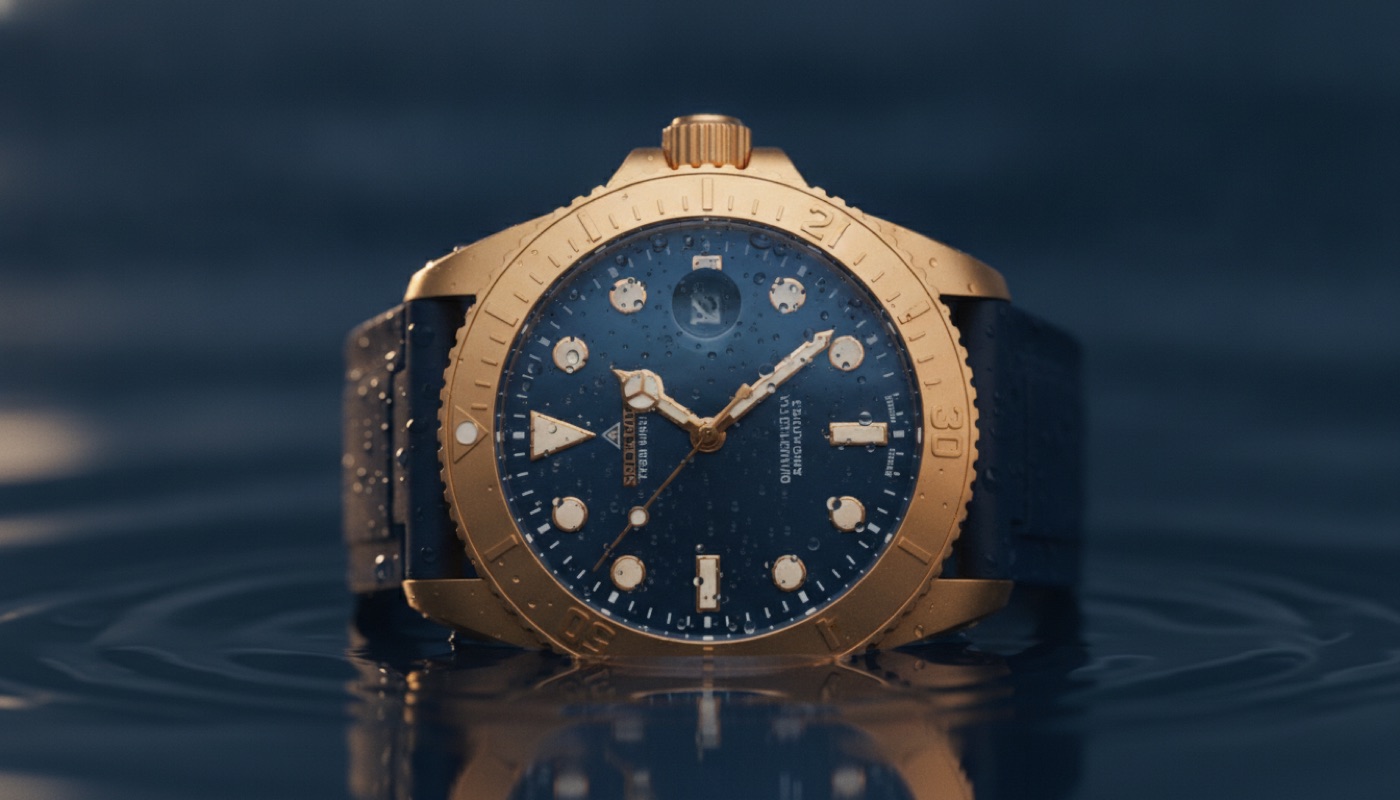
- Sun, salt and real diving: titanium with a ceramic bezel, once you have checked what the water-resistance rating actually promises.
- Tools, sites and hard knocks: steel again, because a dent beats a crack every time.
- A watch that records your years: bronze or acrylic, materials that keep a record rather than resist one.
Material sits alongside movement, size and budget in any real decision. Our guide to choosing a first luxury watch weighs all four together, and our buying a watch topic page collects the rest. You can also compare brushed and polished finishes across the seven Targa collections.
How to read materials on a second-hand watch
Materials tell you how honestly a used watch has aged. Scratches on a steel case are cosmetic history, and a service erases them. A chipped sapphire edge or a hairline in a ceramic bezel is structural, and the part has to be replaced.
Hazy patches on the crystal usually mean a worn outer anti-reflective coating rather than damaged sapphire. Price each of these differently, and keep the seller's answers alongside the maintenance record covered on our watch care topic page.
Tip: Ask which titanium grade a case uses before you buy. Grade 2 and Grade 5 look similar in photographs but wear, weigh and finish differently.
Key takeaways
- Hardness resists scratches, toughness resists cracks. Almost no material does both well.
- 316L steel is the forgiving all-rounder. It is also the only one of the four that can be fully refinished.
- Titanium saves about 43 per cent of the weight. It is nickel-free, though soft grades mark more easily than steel.
- Sapphire sits at Mohs 9. Dust cannot touch it, but a sharp edge impact can chip it.
- Ceramic never fades and barely scratches. A hard drop is still terminal, and repair is not an option.
Material claims are also quality claims, which is why the vocabulary deserves the same scepticism as any other label on a case back. Our look at what Swiss Made teaches about quality standards makes that case at length.
Materials remain the fastest-moving part of watchmaking. Silicon has reached escapements, ceramics keep migrating down the price ladder, and surface treatments improve every year. Whatever the spec sheet promises, choose the way of ageing you can live with. The Watches & Horology journal keeps pace with the rest.