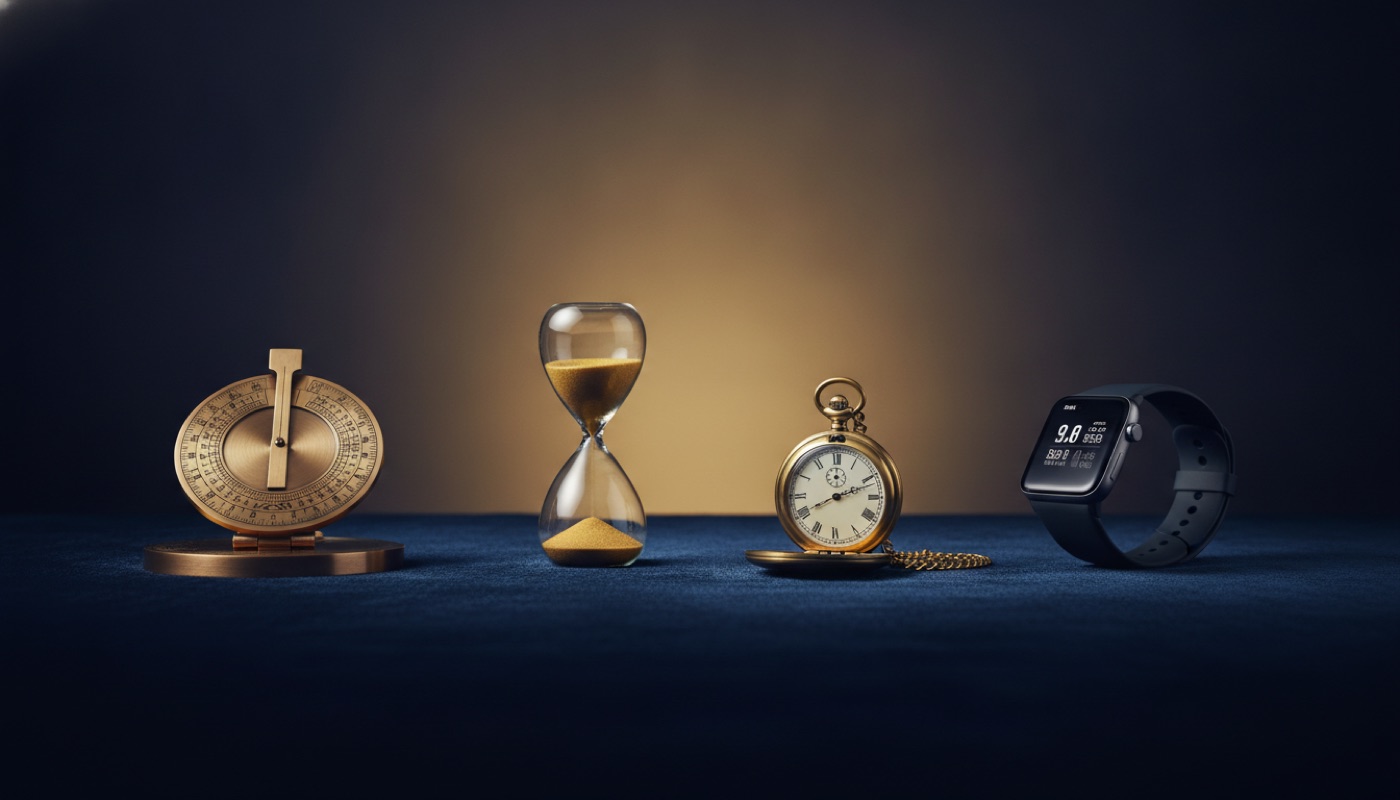
Measuring time is one of the oldest engineering problems, and every solution tells you what its era cared about. The sundial assumed you had all day. The marine chronometer existed because ships were sinking. The wristwatch appeared because soldiers needed both hands.
Three shifts that changed everything
- From shadows to machines. Mechanical clocks freed timekeeping from the weather and the sun.
- From towers to pockets. Miniaturisation turned a civic instrument into a personal one.
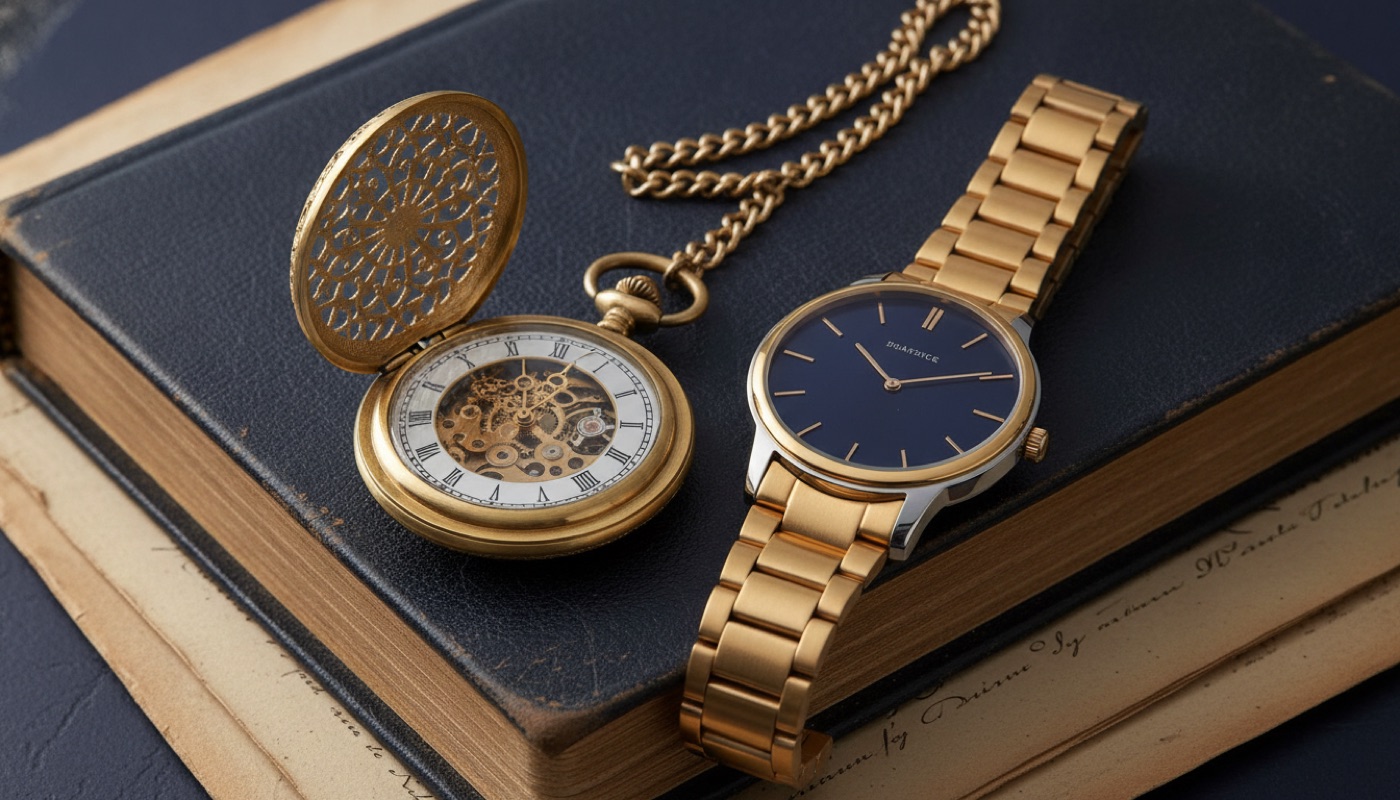
- From pockets to wrists. The First World War made the wristwatch practical rather than ornamental.
Why standards followed the technology
As soon as watches became products, buyers needed a way to tell good from merely shiny. That pressure produced the rules behind labels such as "Swiss Made" — a claim with legal criteria and a test attached, rather than a slogan.
What the history is good for
Knowing the sequence makes a watch easier to read. A subdial at nine o'clock, a screw-down crown, a rotating bezel: each is an answer to a problem somebody actually had. The design stops looking arbitrary once you know which problem.
and every solution reveals what its era valued: the sundial's patience, the marine chronometer's stakes, the wristwatch's hurry.These guides trace that line, and show how the standards we now take for granted — including the rules behind a 'Swiss Made' dial — were argued into existence.